By Carol Corbin, Philanthropy Director, INLC
Cover photo by Lorenzo Menendez courtesy of INLC
“In the days after the fires, we started noticing more birds moving through our preserve along the Little Spokane—and that’s exactly what you’d expect from land like this,” says Inland Northwest Land Conservancy (INLC) stewardship director, Rose Macaulay. “When fire sweeps through a landscape, the moist, green corridors along our rivers often survive largely intact, and wildlife finds them fast. It’s one of the lesser-known reasons this kind of conservation work matters: even if we can’t stop the fire, we can make sure there’s still somewhere green and alive on the other side of it for the wildlife that needs it.”
Birds are often the first sign that a landscape is being used as refuge by displaced wildlife. That pattern isn’t limited to Waikiki Springs Nature Preserve and the Glen Tana Nursery on the Little Spokane—backyard birders across the region have reported record numbers and diversity of species at their feeders since the Spokane Complex fires.
Each summer, as I pack a “go box” in case fire reaches my own backyard forest, I think about the animals—the coyote, deer, turkeys and great-horned owls I often see and hear—whose only plan for wildfire is to flee. Unlike me, they can’t load the car and drive away. They need safe havens from the escalating effects of climate change.
This is one of the problems INLC works to address. What sets land trust conservation apart from other environmental work is the element of perpetuity. In just 35 years, INLC has placed legally binding, permanent conservation agreements on more than 90 special places across North Idaho and Eastern Washington, protecting the refuge that wild animals, birds, fish and plants need, and that makes up the outdoor lifestyle we love here in the Inland Northwest.
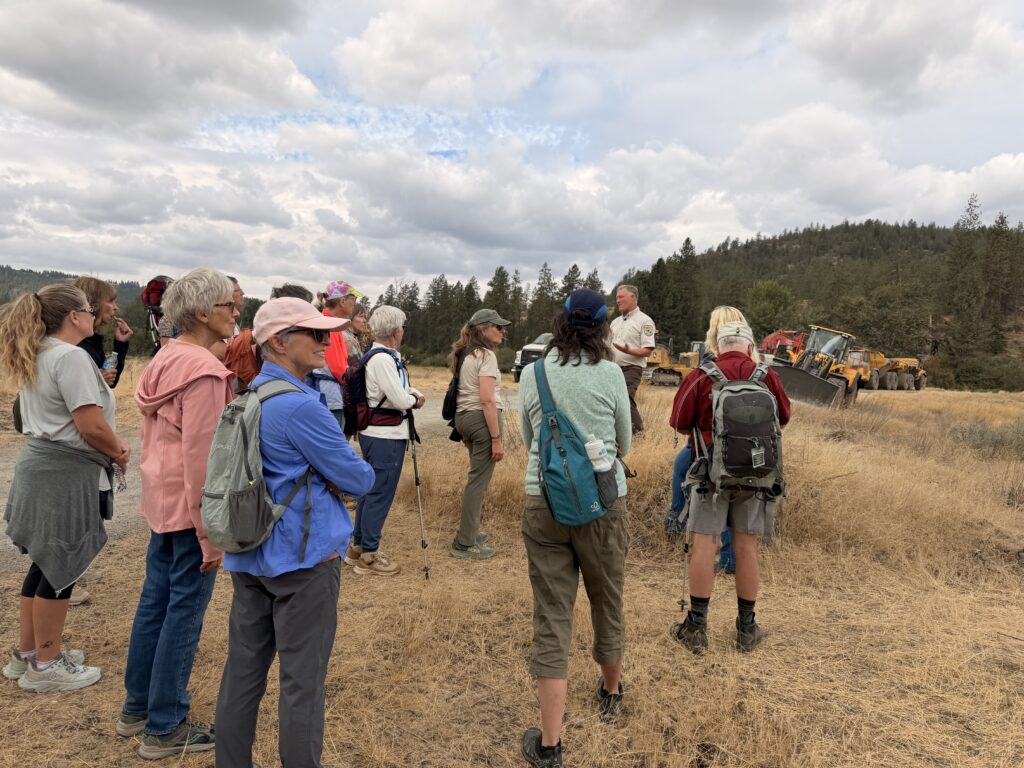
But protecting nature through legal means isn’t enough. As western communities grapple with increasingly devastating wildfires that destroy neighborhoods, forests and public lands, a spot of hope lives in how nature adapts, grows back and heals. This fall, that resilience is on display at Waikiki Springs Nature Preserve, where decades ago the Little Spokane River was cut off from its historical meander. This year, INLC is working to change that: in early August, with a quarter-million-dollar grant from the North American Wetlands Conservation Act, plus funding from Clearwater Paper and the Norm Winn Fund, crews began work on a 10-acre wetland restoration project. A restored wetland* and riparian area will create a natural barrier for fire and a safe resting place for wildlife.
Looking ahead, INLC works with private landowners on healthy forestry practices, wildfire mitigation plans and native plant restoration. Protecting the land for the benefit of all means restoring balanced ecological function, and projects like this one on the Little Spokane do just that. Thanks to more than 1,000 local community members who invest their time and resources in conservation through INLC, this work continues for generations to come.
*You can learn more about this project, and other INLC work, at InlandNWLand.org/news
Sponsored