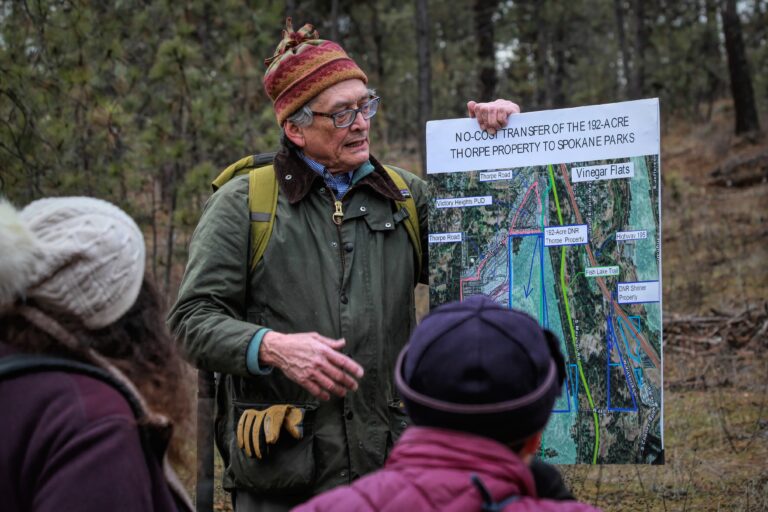
Cover photo courtesy of INLC
This summer, wildfire has reminded us how deeply connected our communities are to the landscapes around us. Fire has always shaped this landscape, but today’s fires are burning hotter, faster and more destructively than these ecosystems evolved to handle. At The Lands Council, we believe the path to a fire-resilient future runs through healthy watersheds, resilient forests and communities that understand and steward the land around them.
We don’t work on isolated issues; we work on an ecological region. Healthy rivers, forests, watersheds and air mean healthier lives for the wildlife and people who call this place home. Our programs in watershed restoration, public lands, urban forestry, climate justice and environmental education help keep water on our landscapes, protect forests, plant trees, advocate for a healthy environment and teach the next generation about the place they live in. As fire becomes a larger part of our region’s future, interconnected issues mean the solutions must be interconnected, too.
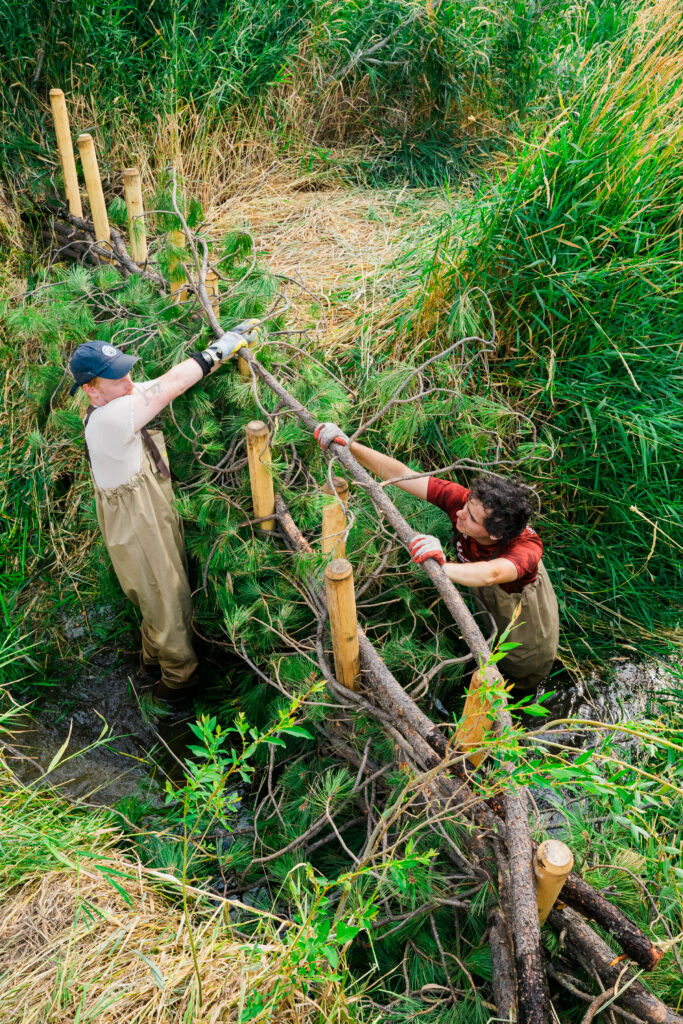
Our restoration program is where much of this begins. By planting native trees and plants, building beaver dam analogs and supporting beaver coexistence, we help keep water on the land longer—recharging groundwater, buffering drought and creating greener, more fire-resilient landscapes. Beavers are natural ecosystem engineers; by following their lead, we benefit everything downstream.
Our urban forestry program brings that same approach into our cities. By planting trees in Spokane neighborhoods with the lowest canopy cover, we cool neighborhoods, improve air quality and protect people from extreme summer heat. And when wildfire smoke settles over our region, air purifiers distributed by our climate justice program help overburdened communities to have cleaner air to breathe indoors. Our public lands and climate justice programs work hand-in-hand, bringing prescribed fire knowledge to our region and advocating for policies that protect both our landscapes and the communities.
Woven through every one of these programs is environmental education. Whether we’re teaching students why snowpack is essential to our region’s drinking water or showing volunteers how to plant a tree correctly, education is how this work multiplies and creates lasting change.
None of these programs exist in isolation. Resilient ecosystems support resilient communities. For more than 40 years, The Lands Council has responded to the Inland Northwest’s environmental needs. As our region faces hotter summers, drought, wildfire, development pressures and other challenges, that work is more important than ever. As federal and state funding for public lands and conservation is being cut, community support and donations give us something federal grants often can’t: flexible funding to respond quickly to whatever our region needs most, whether that’s a wildfire, beaver conflict or a new restoration opportunity.
We are deeply grateful to the volunteers, donors and partners who make this work possible. Together, we can help ensure that the forests, waters, wildlife and communities we love are here for generations to come. The future of this region belongs to all of us.
Want to help build a fire-resilient future? Visit Landscouncil.org to donate or get involved.
Sponsored