Bring your garden into balance with this gardening tip game changer.
By Bri Loveall
At the end of one particularly frustrating gardening summer, a friend who also happened to be something of a gardening guru and scientist asked me what I knew about soil health and whether I had ever heard of cover cropping.
Up until then, this is how I gardened: neat and tidy rows of cabbages in one spot, carrots in another, tomatoes in yet another secluded location of my choosing. I invoked the powers of rakes and hoes, digging deep into the earth to turn up weeds before saturating the ground with commercial fertilizers. I claimed the earth by working as a source of power against nature instead of with it.
That afternoon my friend spent walking around my dismal garden was a lesson in soil health and regenerative practices. She pointed out the things I was missing (like that my garden was basically comprised of dirt and it was no wonder nothing had grown), while also dispelling many of the myths I previously believed (plants would only grow with fertilizers).
Soil health, she explained, is the number one indicator of whether a garden will thrive; it is the living foundation for all that we hope to grow, and cover cropping is just one small part of ensuring that health. What she was describing wasn’t a niche gardening trick but a foundational principle that applies to every garden, regardless of size or location. When soil health is neglected, we compensate with more labor and more inputs; when it’s prioritized, the garden begins to function as a living system rather than a constant problem to solve.
Cover cropping involves growing crops like legumes, brassicas or grasses in between (or directly in) beds to improve soil health, mitigate weeds, help with erosion and water retention, and create biodiversity for the next round of crops. They are fast-growing annuals or perennials that fix nitrogen and generate biomass that can be used to help promote a no-till garden. Their thick taproots help break up and aerate the soil, increasing the surface’s permeability.
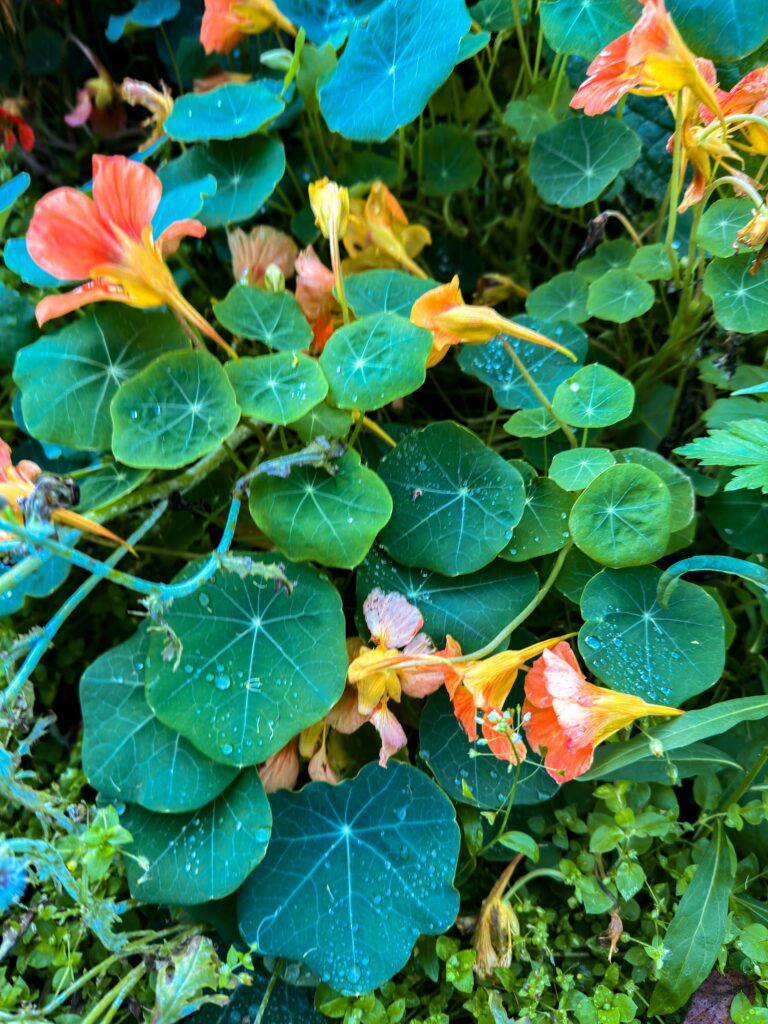
They are the answer to a multitude of garden ailments. Noxious weeds? Plant oats and winter rye in the early or late season to help outcompete the growth of weeds. Compacted soil? Cover crops like daikon radish grow taproots between 18 and 24 inches long, effectively breaking up even the hardest earth. Aphids? A thick patch of nasturtiums acts as a trap crop for those pesky insects while also attracting beneficial bugs. If you are adding cover crops to your garden to increase biomass, simply cut or fold the crop when it reaches the appropriate height (do not till) and cover with a tarp for three to four weeks before planting directly into the bed.
I now garden with soil health in mind. What once required force now requires patience, observation and restraint. The garden thrives not because I work harder but because I work differently.
Bri Loveall is a writer and reformed control-freak gardener who now lets plants do most of the work. Her rakes and hoes are currently rusting in peace.