By Adam Gebauer
Cover photo courtesy of Adam Gebauer
There are now Canadian lynx kits learning to hunt snowshoe hares in the Kettle Range. Lynx were mostly gone from this region due to overhunting and loss of habitat, but the Confederated Tribes of the Colville Reservation, working with many partners, have reestablished breeding populations of this elusive cat. This is just one example of how some wildlife species are regaining niches they once occupied in Eastern Washington.
Natural recolonization occurs when there are sufficient individuals in a nearby population to disperse into areas that have adequate habitat and food. Facilitated reintroduction has to take many things into account, including a robust source population; data that demonstrate sufficient habitat and food sources; and the opportunity for genetic connection with other populations.
Species like wolves naturally recolonized Eastern Washington when individuals from British Columbia and Idaho moved into the state. In 2008, the first pack was documented in Washington in nearly 80 years. Grizzly bears are another species naturally recolonizing Northeast Washington. There are currently 50 to 60 grizzlies that call the Selkirk Mountains of Idaho and Washington home. These bears spend most of their time in Idaho, but individuals have increasingly been found roaming in Washington, including the occasional visit to a chicken coop.
Chairman Erickson of the Confederated Tribes of the Colville Reservation says the tribe’s goal is to restore all the wildlife species that once existed on their ancestral lands. He recognizes that this is a long-term and opportunistic project that will benefit the ecosystem while also providing subsistence and cultural opportunities for tribal members.
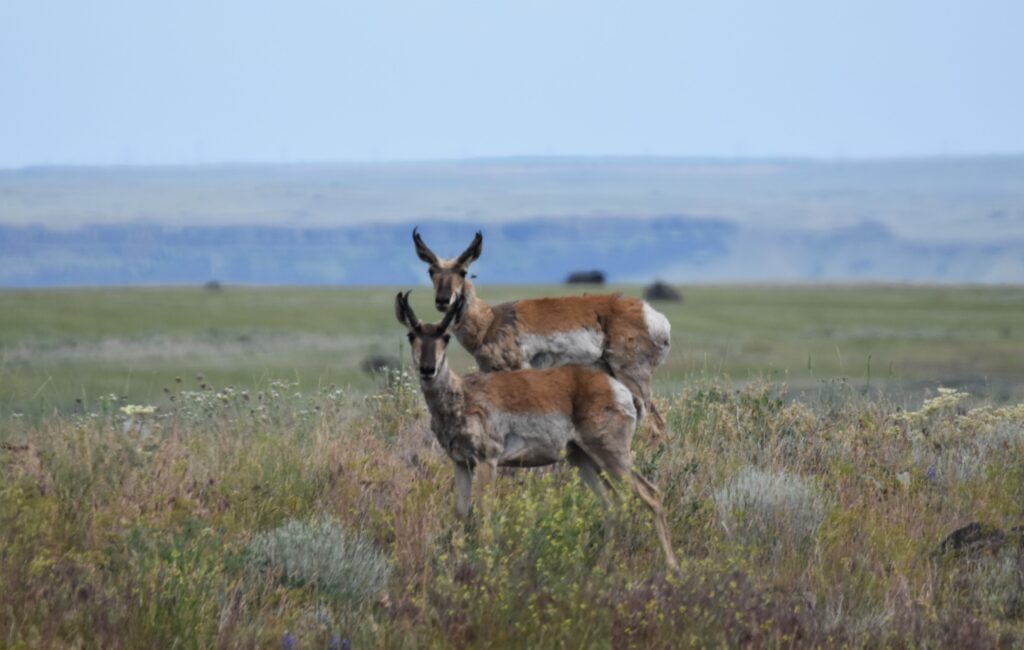
The Colville Tribe has established desert bighorn sheep in the Okanagan Highlands, with several herds totaling around 200 animals. They have brought sharp-tailed grouse south from Canada, where the chairman says they grow on trees, even though they are supposed to be a prairie grouse. Both the Colville and the Yakama Nation have reintroduced pronghorn from Nevada. No one thought that pronghorn could swim, but they crossed the Columbia River, and there are now herds that have moved off both reservations. This past fall, a Colville tribal biologist determined that pronghorn populations are robust enough to issue the first hunting tag.
The Colville recently worked with the Kalispel Tribe of Indians to reintroduce woodland bison near the aptly named Buffalo Lake. They have been able to harvest several for elders and ceremonies. Because of the relatively small land base of the Kalispel Tribe, they manage a captive herd of buffalo, but they are also looking to reestablish wildlife species on their ancestral lands, including lynx in the Selkirks and northern leopard frogs in lowland wetlands.
Both tribes have been working with tribes and managers in Canada to bolster the population of woodland caribou. By 2018, there were only three members of the southern Selkirk herd. Chairman Erickson and a Kalispel tribal representative have both expressed interest in establishing caribou in Washington but acknowledge they are a long way off.
Federally, there are on-again, off-again plans to facilitate the reintroduction of grizzly bears to the North Cascades. In a collaborative effort, fishers—members of the weasel family that hunt porcupines, among other species—were recently reintroduced into the North Cascades.
With any change to our environment, we must adapt, and having newish species on the landscape is no different. Many of these adaptations are small, like securing your trash cans, chicken coops and bee boxes from grizzlies and black bears or watching for pronghorn while driving U.S. Highway 2. Others, like modifying how cattle are run on rangeland to reduce wolf predation, can be a management challenge.
These animals are reclaiming environmental niches, adding to species and genetic diversity and creating a better balance of predators and prey. As these species’ populations grow, there may be harvest opportunities for nontribal Washingtonians. But for now, they create amazing opportunities for new wildlife sightings.
Adam Gebauer just needs to keep moving outside, whether it’s trail running or trying to coexist with beavers and humans. His spring will be full of leaky waders and wandering trails.