By Lisa Langelier
Cover photo courtesy of Tom Munson Spokane Audubon Society
Summer is prime time to experience birds in the Inland Northwest. All migrants have returned from their winter destinations and like our resident birds, are busy singing, courting, building nests, raising young and feeding families.
You don’t have to travel far or need expensive equipment to get started. One of my favorite places to birdwatch is right in my own backyard. Two simple things you could do to attract birds include feeding hummingbirds and providing a bird bath.
Who can resist hummingbirds? Weighing less than a penny, the calliope hummingbird is the smallest breeding bird in North America. Measuring only three inches tall, these feathered jewels make epic journeys from their winter quarters to summer breeding areas. Powered by nectar, small insects, and spiders, they beat their wings between 22 and 80 beats per second, but when drinking at hummingbird feeders they sit still.
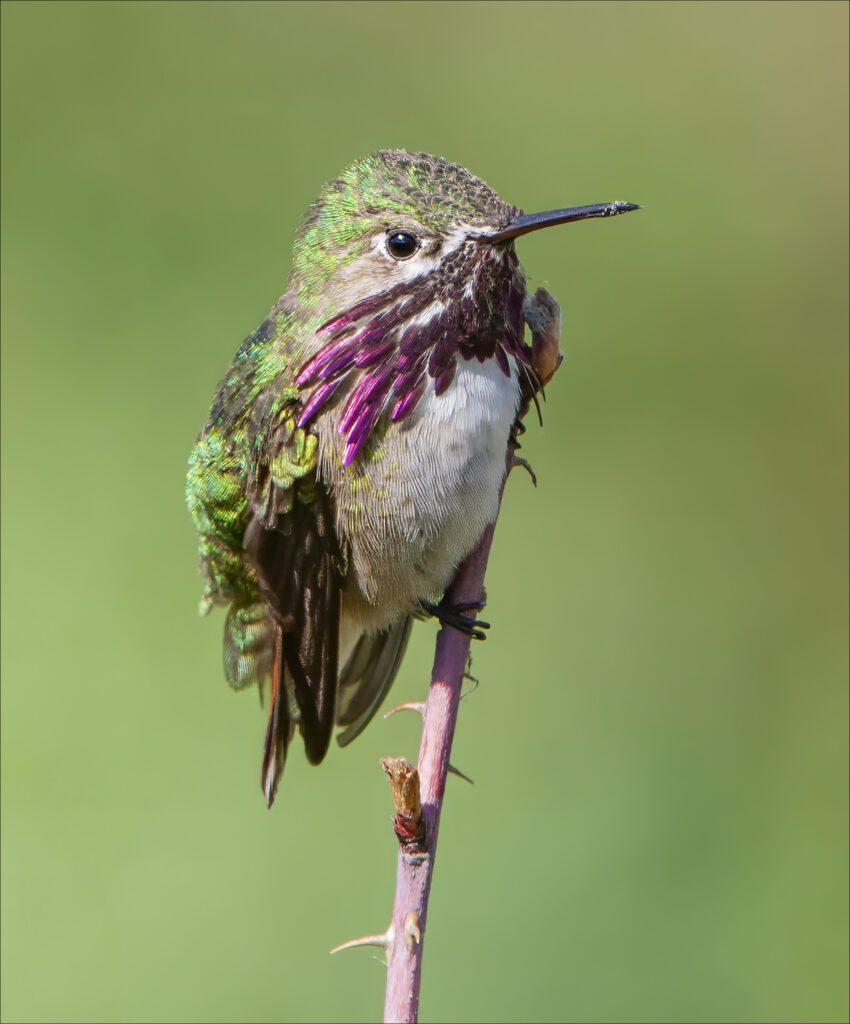
To attract hummingbirds, use a mix of one-part white sugar to four parts water—I use one part boiling water to melt the sugar, then mix in the remaining amount of water. Avoid honey, red dye and organic sugar as they can be fatal. Clean the feeders regularly (daily in hot weather), even if there is remaining nectar.
Another way to see more birds near your home is to provide clean, fresh water. Many species of birds really go for moving or dripping water. I found my dripper at a local specialty store. The best options for drinking and bathing birds are bird baths that are one to three inches deep. Water draws a variety of bird species and the voyeur in me loves to watch.
American robins and western bluebirds have a hearty splash-filled bathing style. Robins chase off other potential bathers while bluebirds have social baths—sometimes the whole family jumps in for a splash fest. Say’s phoebes and eastern kingbirds sit on and drink from the dripper that overhangs one of my bird baths. They glide over the water, skim the surface, then shake and preen. Hummingbirds have a distinctive technique—they hover over the end of the bath and catch the drips with their breasts. They sometimes fly through garden sprinklers.
Another way to get to know summer songbirds is to stop and listen. Their songs and calls fill the air as they sing to attract mates or stay in contact. The Merlin app from Cornell Lab of Ornithology has exposed more people who are learning and enjoying bird song. Robins are early morning singers, warbling their “cheerio-cheerup” phrase. House wrens seem to sing incessantly and exuberantly—a loud, complex musical trill rising and falling in pitch.
And while you are listening, watch for birds on wires, singers in the open, birds on the water, or soaring hawks in the sky. Our region is rich with open space and natural areas where birds live. A few of my favorite birding locations include Turnbull and Little Pend Oreille National Wildlife Refuges, Iller Creek and Stevens Creek in the Dishman Hills, Waikiki Springs on the Little Spokane River, Saltese Flats and my own backyard.
Birdwatching is for everybody. It encourages us to care for lives different from our own. Birds are all around us, and they need us to take care of them.
Sponsored by Spokane Audubon Society. Learn more about upcoming birding and other nature outings and volunteer projects at AudubonSpokane.org.