Exploring the Calm Beauty and Hidden Hazards of the Little Spokane River Natural Area
By Shallan Knowles
Cover photo courtesy of Shallan Knowles
As I pulled in to the Little Spokane River put in, I easily spotted my friends unloading their boards and pumps in the busy gravel parking lot. The heat of the mid-August day was at its peak, and the effort to inflate my board was going to heat me up a bit more. As we hauled our gear down the path to the put-in, we passed the long list of rules posted near the parking lot without giving them much thought, since we already planned on keeping our impact on the river’s fragile ecosystem to a minimum. As a reminder that we were entering a place with strong protections for wildlife, a small mink scurried off the path and into a nearby pile of rocks.
Our group of friends, a mix of small business owners, state employees, and adventure buddies set off down the river with four paddleboards and one kayak, settling in for a relaxing float with hopes of spotting one of the river’s resident moose.
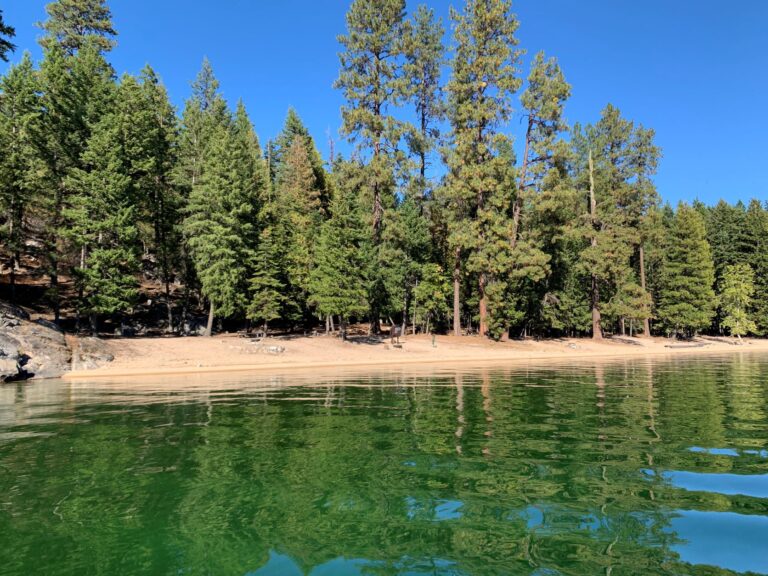
At first glance, the Little Spokane River in the warmer months often looks calm, with deep water and a sandy bottom. On a hot day, the water is inviting, but this poses a problem for the enlightened paddler. As the sign at the launch points out, the Little Spokane is designated as a no-swimming waterway. The Washington State Parks and Recreation Commission established the natural area to “conserve the natural resources, scenic beauty and tranquility of the area.” Paddlers are urged to respect this call for quiet as many species of wildlife are particularly sensitive to noise.
The river carried our group around the first bend and then the next. At times, the waterway would widen, offering glimpses of darting fish in these shallow stretches. Dead branches sitting atop sandbars seemed to be a favorite perch for ducks warming themselves in the sunshine, with shallow vegetation nearby offering prime fowl forage.
A few more winding bends later, we came upon a group of paddlers standing around in the water, which we all learned from one of our wiser crew is a violation that could lead to an infraction. According to Washington State Parks Ranger Danny Murphy, that infraction is $99. There is a surprisingly long list of activities that are not allowed in the Little Spokane River Natural Area in addition to swimming and standing on the river bottom, including floating with tubes or air mattresses, consumption of alcohol (on the water or shoreline) and dogs. My pup loves a good float but would also see the ducks and any other wildlife as the perfect afternoon snack worthy of a chase.
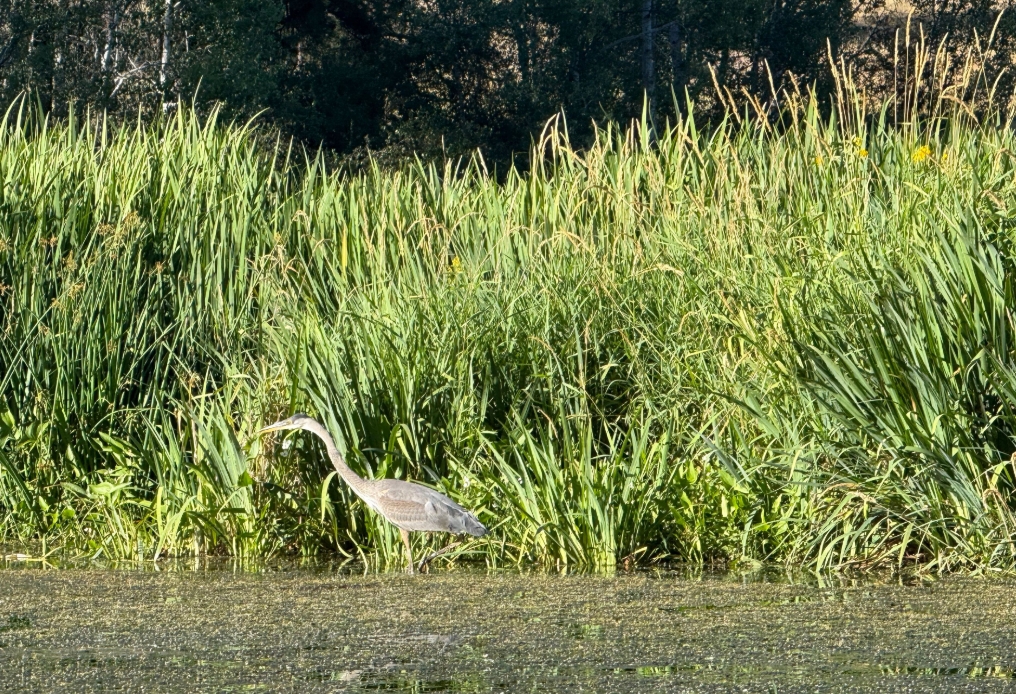
Around one bend we quietly watched a great blue heron fishing in the shallows among tall, bright green grasses. The river and shorelines are littered with the wood of fallen trees, some covered with moss and ferns, providing more habitat for the many fish and wildlife species that call the area home. It’s not uncommon to see a moose and deer near the water’s edge and fish, including reintroduced salmon, darting under your craft. The trees and wetlands surrounding the river attract many species of migratory and resident birds that make the float feel like a wildlife safari.
While much of this popular paddle is slow and serene, there are natural hazards that demand alertness. We were reminded of the power and surprises moving water can present as we came around one tight curve with a large root mass from a fallen tree. The paddleboarders shot through the section quickly, but the kayaker struggled to dodge the branches and quickly found herself wedged under the roots. Rushing water pushed her around, sending waves of water into her pinned boat.
After struggling for several minutes against the current and unmoving branches, one of our crew paddled back upstream to help. Fortunately, everyone kept calm. Our stuck kayaker friend carefully stepped out of her boat and onto a sturdy branch, which allowed the two of them to dislodge it from the strainer. While we could easily stand up in other places in the river if needed, this deeper channel meant that wasn’t an option. In accordance with one of the other rules of the river, we all had our lifejackets zipped and ready for situations like this.
In my conversation with Ranger Murphy after the float, he explained the logic behind not allowing tubes or popular floaties on the river. They are not maneuverable in the same way as kayaks and paddleboards, he explained. Washington State Parks rangers pull several deflated tubes out of the river each season. Branches and other river obstacles can destroy craft not built for waters like this. Save them for the bigger Spokane River!
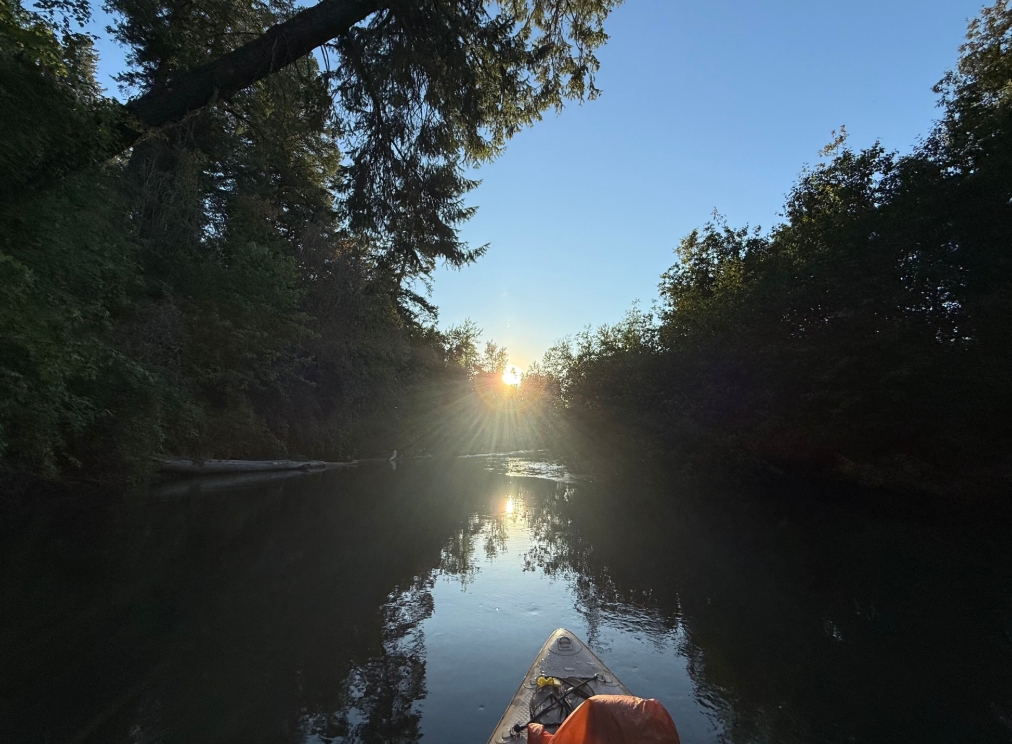
A little cold and shaken, we paddled the final stretch to the take-out as light began to fade with the setting sun. On the banks, a beaver caught our attention before he quietly slipped into the river. We didn’t see a moose that day (please don’t call 911 if there is a moose in the river, as some paddlers do). If you’re lucky enough to spot one, quietly use your paddle to navigate around, giving them a wide berth. The Little Spokane gave us exactly what we came for—a peaceful float, a few surprises and a reminder that even quiet, peaceful rivers deserve respect.