As the crowds of summer road-trippers thin, fall is a quiet, cool time to hunt 50-million-year-old fossils at Stonerose Interpretive Center in Republic, Wash. The nonprofit-run dig, located at the north end of town, sits atop what was once an ancient lake. As sediment and volcanic ash settled and hardened into shale, the layers preserved delicate impressions of Eocene-era leaves, insects, fish and even bird feathers.
The site was first discovered along Knob Hill Road in 1977 by paleobotanist Wes Wehr and paleontologist Kirk Johnson, then a Seattle high school student. Friends of Stonerose Fossils, the nonprofit that has run the center since 1989, still owns and operates both the interpretive center and the Boot Hill dig site two blocks away at 15 North Clark Avenue in Republic.
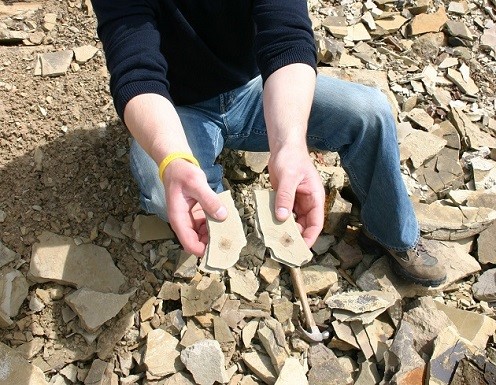
Visitors can rent a chisel and hammer (or bring their own), split open pieces of shale and keep up to three fossils per person per day after staff review each find. Some finds turn out to be entirely new to science. A fossilized insect wing found along Highway 20 by digger Keir Hichens was a newly described extinct stick insect genus and species named in his honor—a reminder that amateur diggers here have turned up specimens scientists had never seen before. Stonerose’s own logo fossil, Florissantia quilchenensis, a flower from an extinct relative of the cocoa tree, made National Geographic in 2002.
This fall, the Boot Hill Fossil Site is open Wednesday-Sunday, 8 a.m.-4 p.m., through Oct. 31, when the public dig closes for the season. The Interpretive Center and gift shop, where museum admission is free, stays open Tuesday-Sunday, 8 a.m.-5 p.m., year-round except for holidays. Fossil site admission runs $7 to $18 per person with kids 4 and under free. Plan a visit at Stonerosefossil.org.