By Lisa Langelier
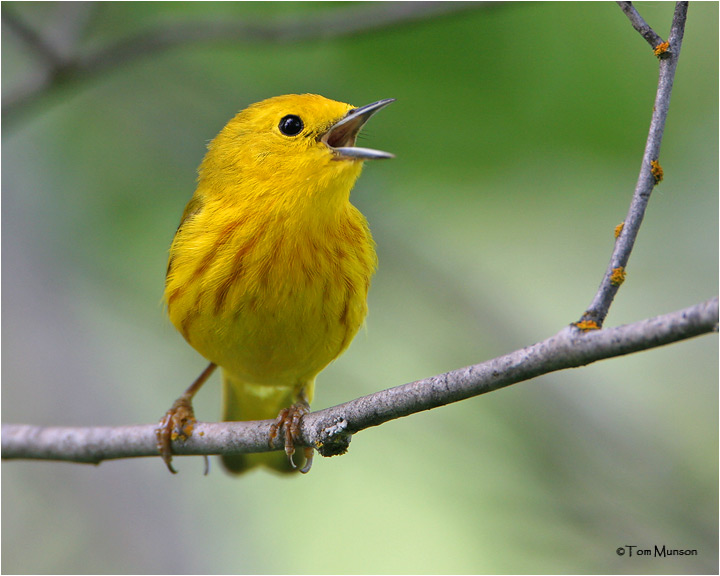
Cover photo courtesy of Tom Munson
By September about 80% of the birds that nested and raised young in our area have left for southern destinations. Bird migration is a natural spectacle and an endurance race. Consider northern yellow warblers—common summer residents of shrubby woodlands near water, these birds flit among branches seeking insects. The male sings a sweet high-pitched song that sounds like “sweet, sweet, I’m so sweet.” He appeared here from Mexico or Central America in mid-May. After breeding season, he heads south again in mid-August. Flying at night, he rests and refuels during the day for up to 8 weeks!
Why do they do it, you wonder? The short answer is food. Our northern summers are food-rich and attractive to insect-, nectar- and fruit-eating birds. Our summers offer long hours of daylight (between 13.5 and 16 hours) for birds seeking food. As these food sources wane, birds must move on or die.
In the United States, over 80% of bird species migrate at night. Conditions that favor nocturnal movement include cooler temperatures, reduced turbulence and fewer predators. During the night they can see magnetic fields and navigate using the stars.
Another bird that shares part of the year with us is the calliope hummingbird. As the smallest breeding bird in North America and the smallest long-distance migrant in the world, calliope hummingbirds travel over 5,000 miles each year to Mexico and back again. These tiny travelers that weigh less than a penny migrate during the day and make stops along the way to rest and forage. Daytime migrators include hummingbirds, raptors, swallows and waterfowl. Many of these birds use landmarks including rivers and mountain ranges.
During their remarkable journeys, they seek places to rest and eat. These stopover sites are critical to their success. They may rest in a city park or a wild natural area. But many of these stops are unprotected and vulnerable to disturbance. Most mortality of these long-distance migrants occurs during migration.
What sparks these migratory movements? Changes in length of daylight, reduced food supplies and hormonal shifts combine to stimulate migration. During some autumn nights, millions of birds fill the sky heading south. Peak fall migration in Spokane County occurs on some nights from September 2 through 24. To make it safer for migrating birds, you can turn off nonessential lights during this period. If you are interested in learning more about local birds migrating in real time, visit BirdCast.org/migration-tools.
With luck and favorable conditions, our northern yellow warbler and calliope hummingbird will return during the spring to grace us with their songs and feathered energy.
Sponsored by the Spokane Audubon Society. Learn more about upcoming birding and other nature outings and volunteer projects at AudubonSpokane.org.