Photos by Shallan Knowles
Everyone wants to get behind the gates to see how their favorite places in Riverside State Park were impacted after the Spokane Complex wildfires, but ongoing safety hazards and to protect the park’s soils, trails and plants, park users will need to wait until restoration work is complete.
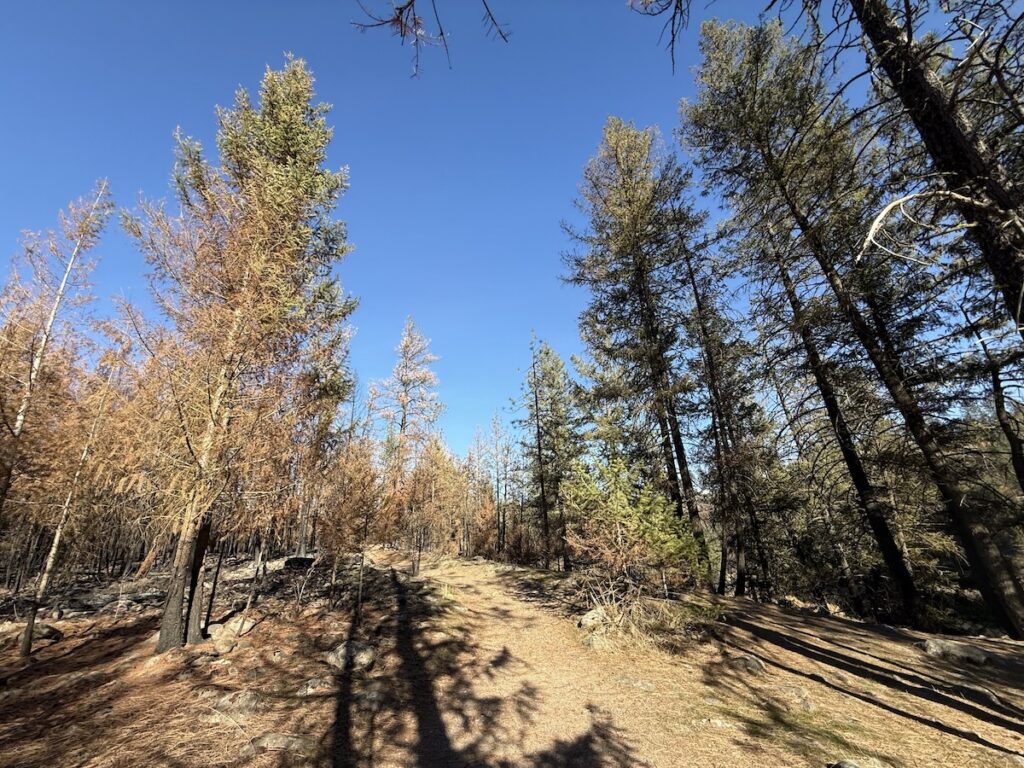
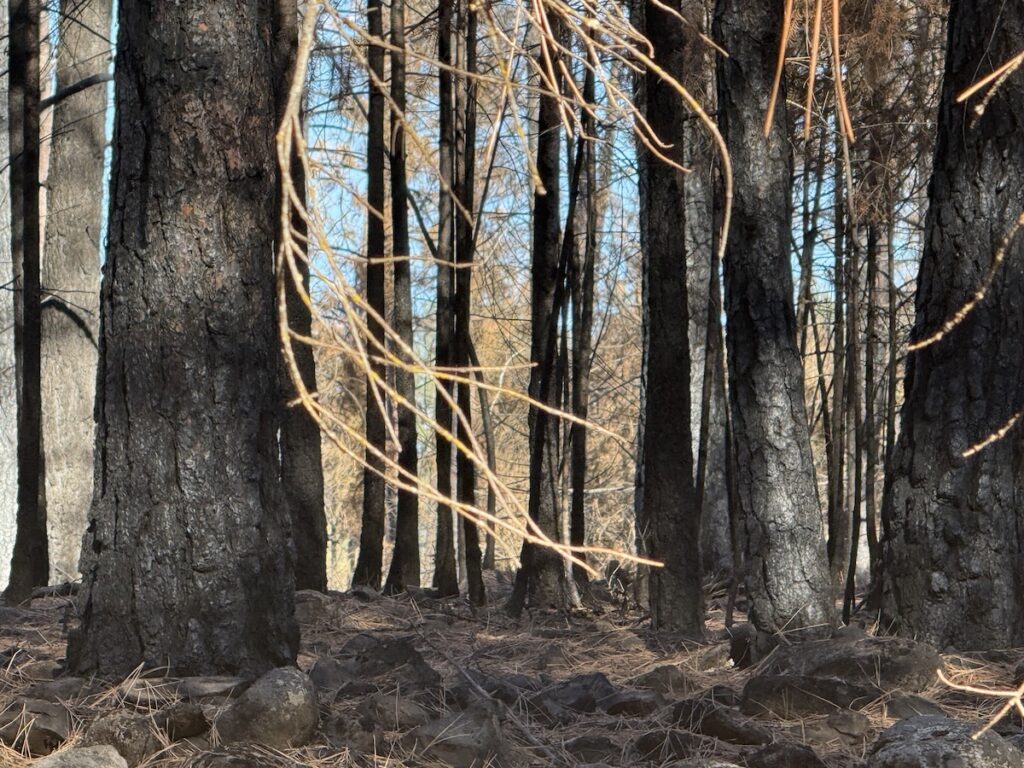
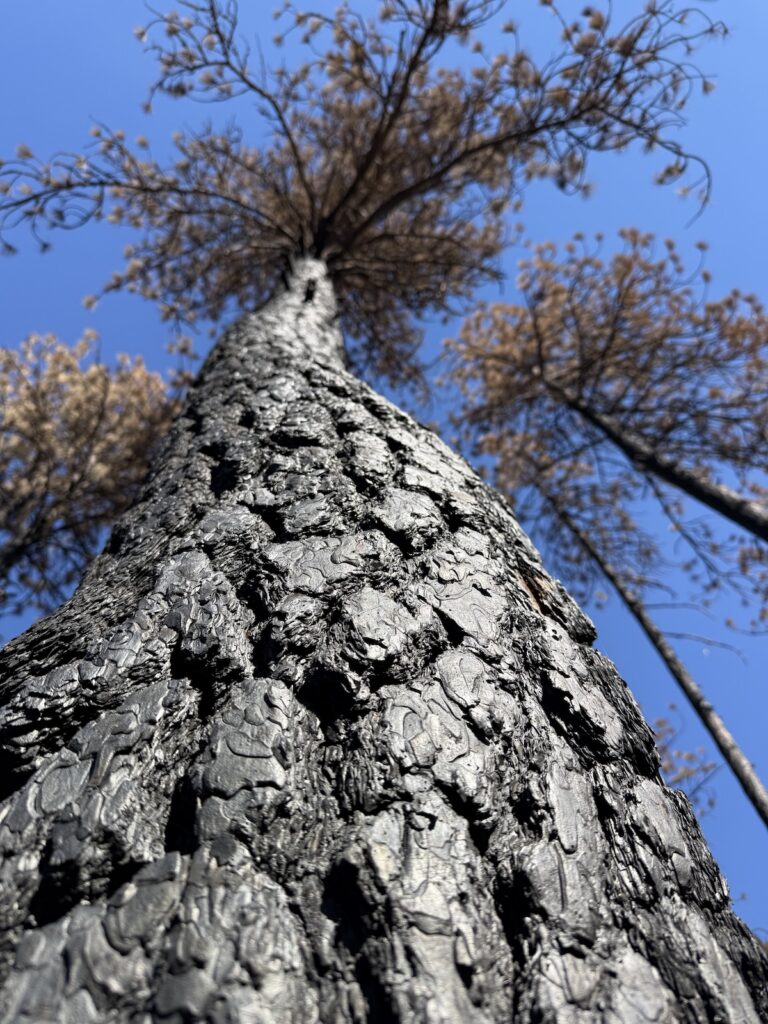
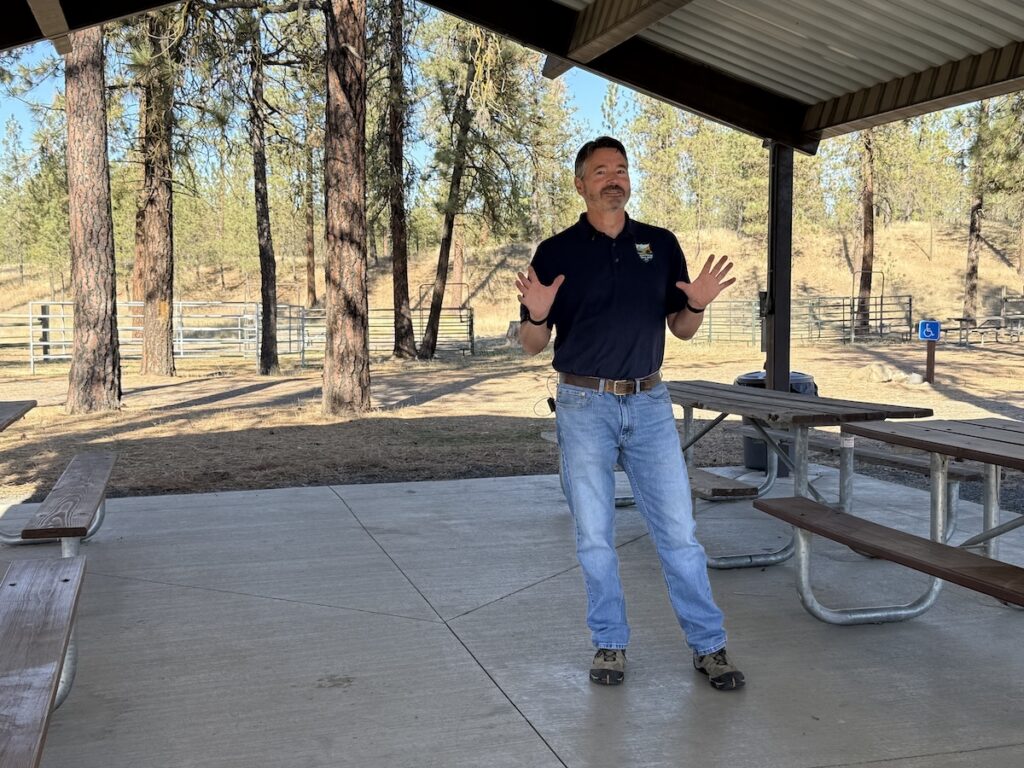
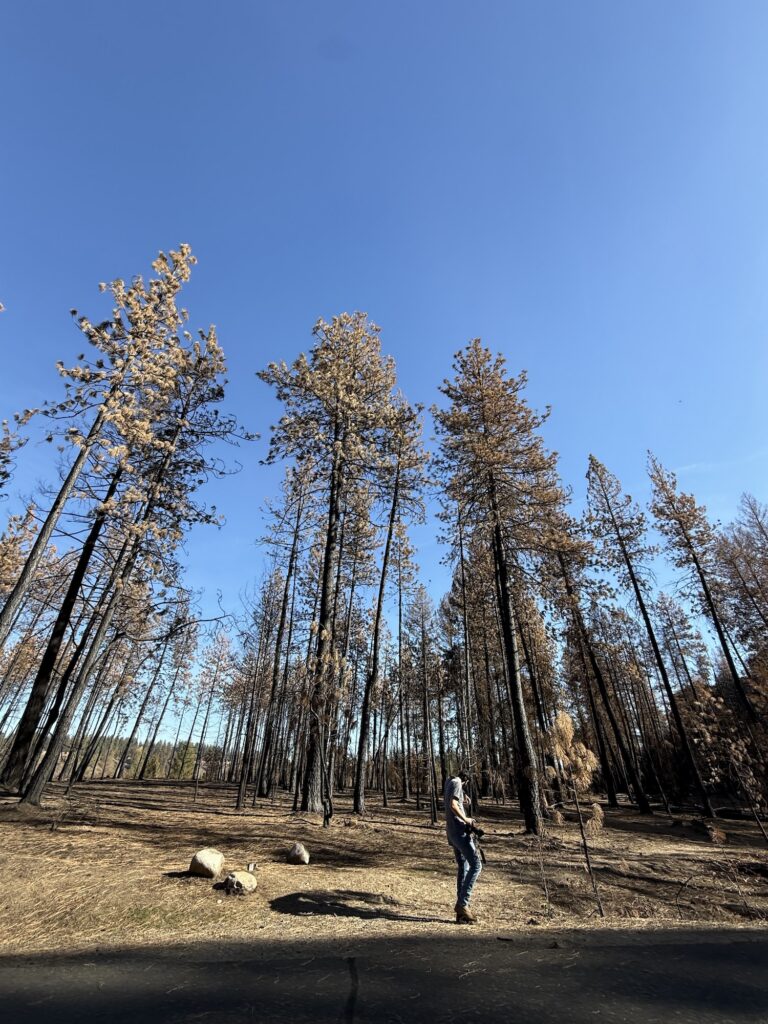
In mid-October 2026, Washington State Parks staff opened areas of the park that have been closed since the fires for a guided media tour, letting a few of us take a look to share with our readers. Staff described the day the fireballs hurled themselves over the basalt cliffs above and burned the tops of trees. We saw the crispy bark for ourselves and watched as curious mule deer turned to see what humans were doing in their space again.
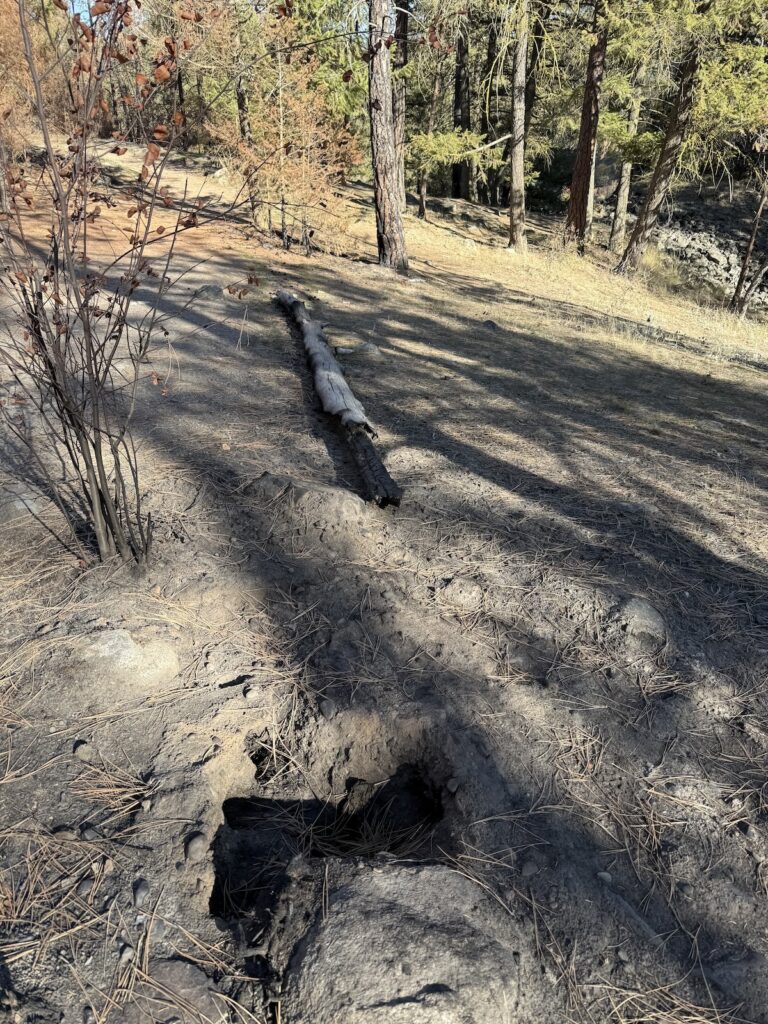
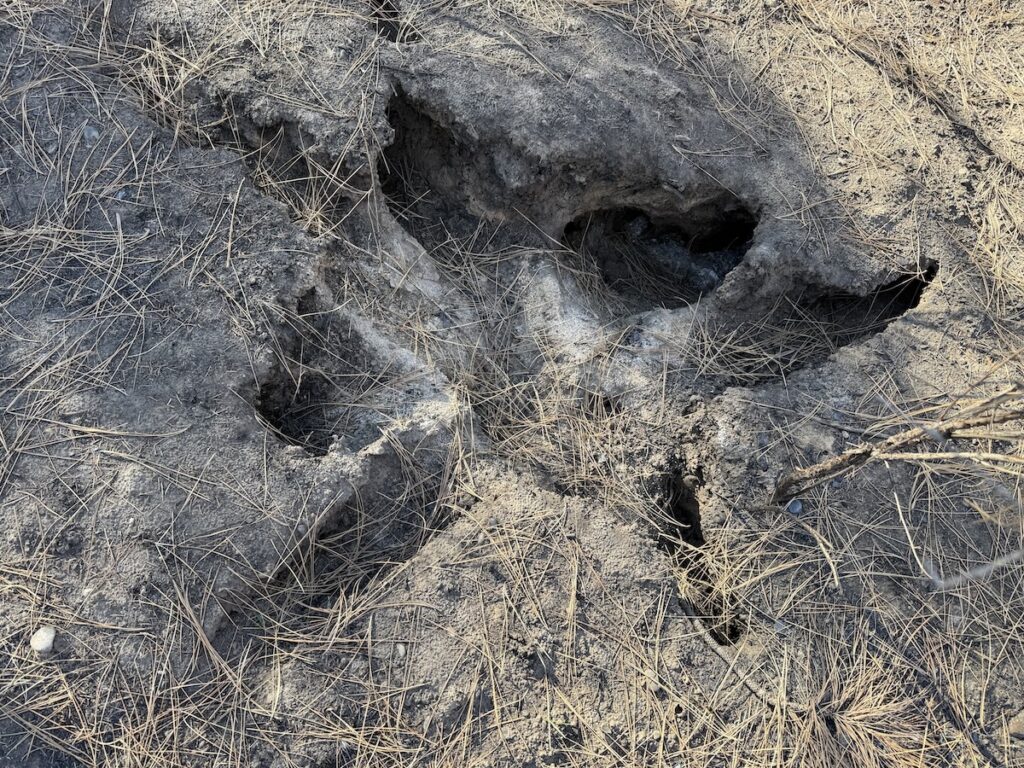
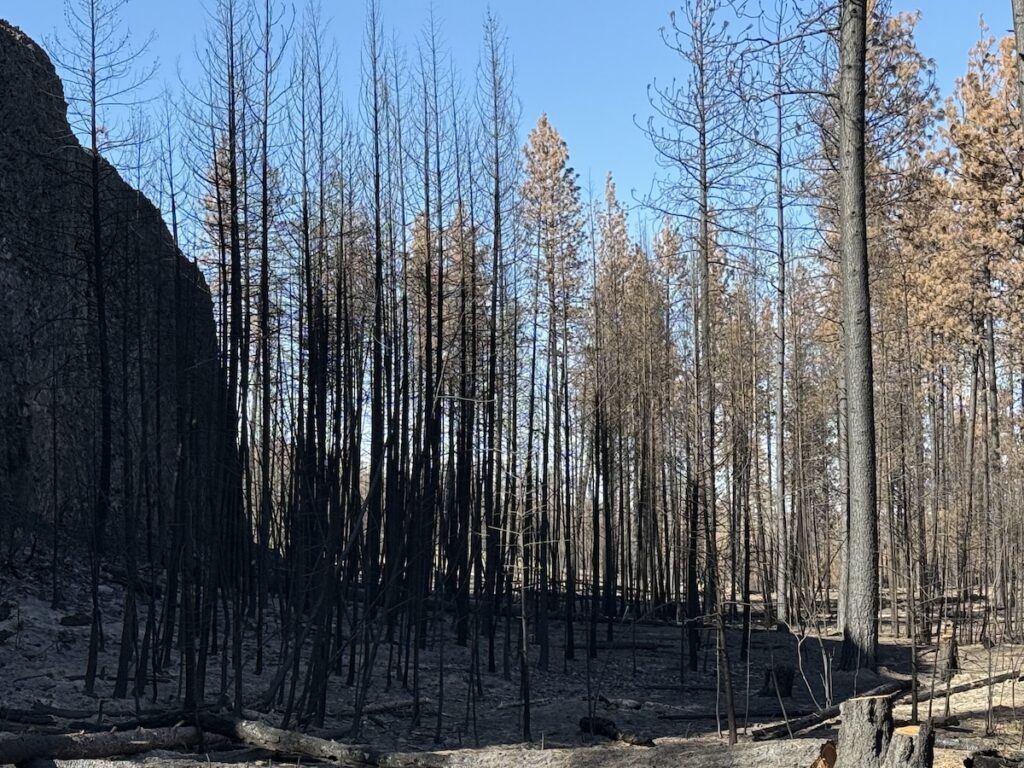
The flames on Aug. 1 were horrifying for our community. We know fire is an important part of our forests, but this one was different. It had a much larger impact, and the trees burned long past the first day, with live fire still found until Aug. 17. In many places, trees had burned through the stumps, leaving root-ball-shaped holes in the ground. All in all, about 30% of the park burned.
Avista has power lines through the park, and many of them were damaged as well. Crews came in to restore the lines, and the bulldozers came along too, widening some sections of trail. The heavy heat had burned many trees that were left standing nearly all the way through, leaving them weak and susceptible to falling.
In the process of fighting the wildfires, bulldozers also turned the ground over. Archaeologists will evaluate every area of disturbed ground to preserve any Native American artifacts that may have been exposed.
Park staff are now preparing for salvaging some of the burned trees this fall and winter as crews are able. The hope is that the sale of salvaged timber will offset some of the cost of park restoration. The most important part of the operation will be removing trees that could pose a risk to park visitors.
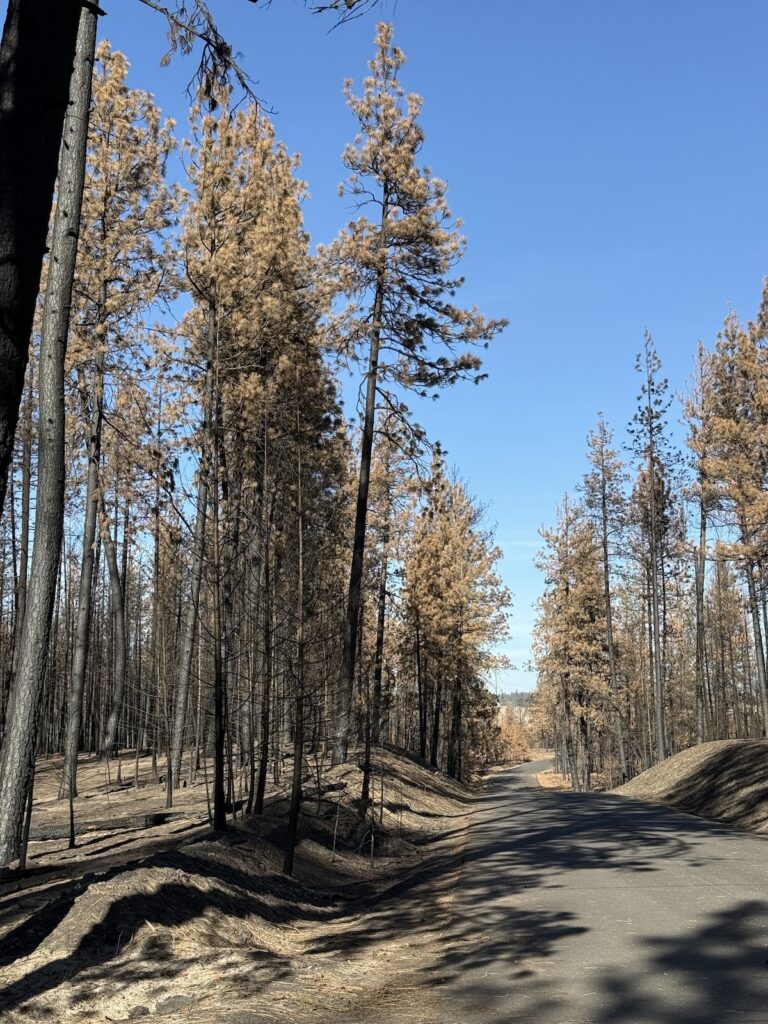
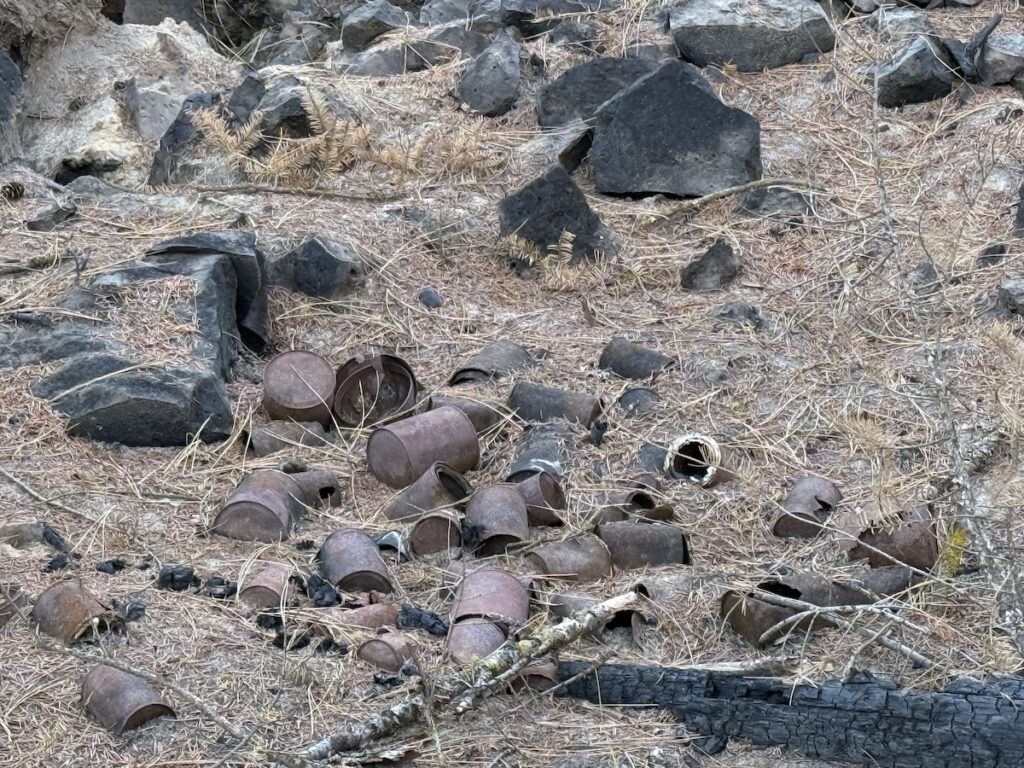
As we looked over the torn-up land and crispy trees, a few deer came down a bulldozed road. It was previously a singletrack trail through thick brush, but is now a large cut in the hillside. Piles of vintage garbage, exposed by the fire and fire lines, littered the ground in some places.
As the forest slowly recovers, erosion risk remains high, and invasive species will begin to claim a foothold in many disturbed places. In the spring, crews will plant native plants to stabilize soils and attempt to prioritize recovery of native flora.
The sounds in the park have changed, too. Park staff pointed it out as we peered into the charred sticks poking up out of the ground. Normally, the air moving through the trees, the birds and the bugs are all a bit muffled by thick underbrush. Now standing there in the burned forest, it was much quieter, every sound sharp and a bit eerie.
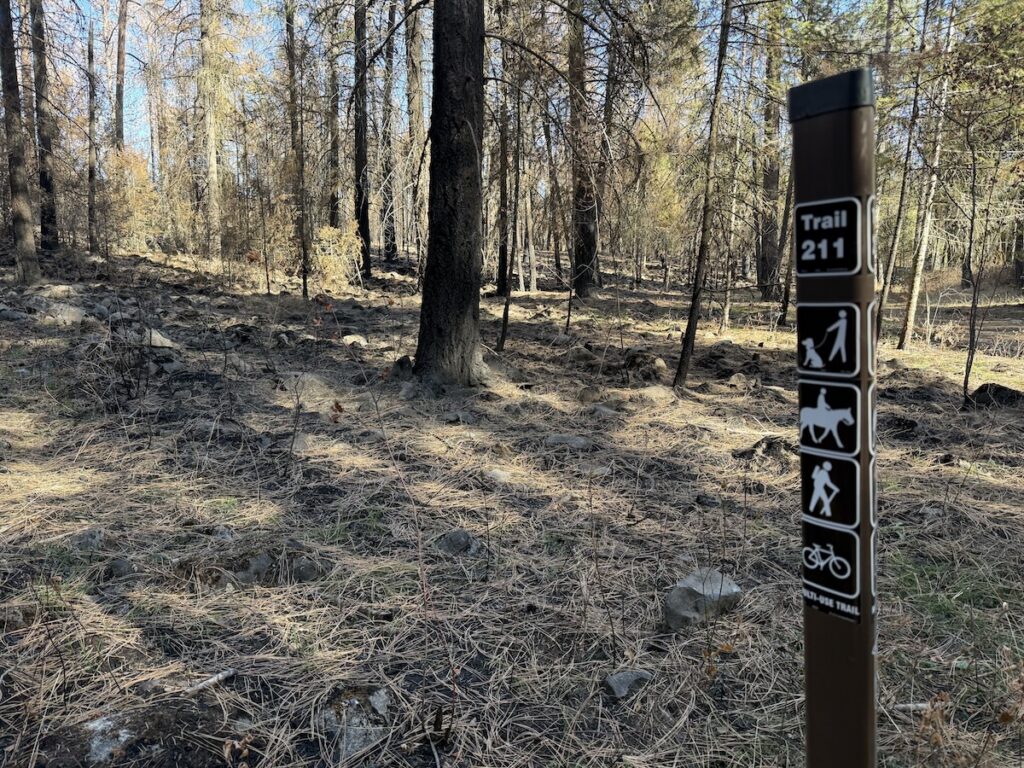
For now, many popular trailheads remain closed with no clear timeline for their reopening for public use. Keep tabs on the work at Riverside State Park and notices about future trail and trailhead openings at Parks.wa.gov/find-parks/state-parks/riverside-state-park and consider making a donation to the Riverside State Park Foundation nonprofit group to help rebuild and restore infrastructure that was lost or damaged in the fires.
Read more of our coverage of the 2026 Spokane wildfires here.