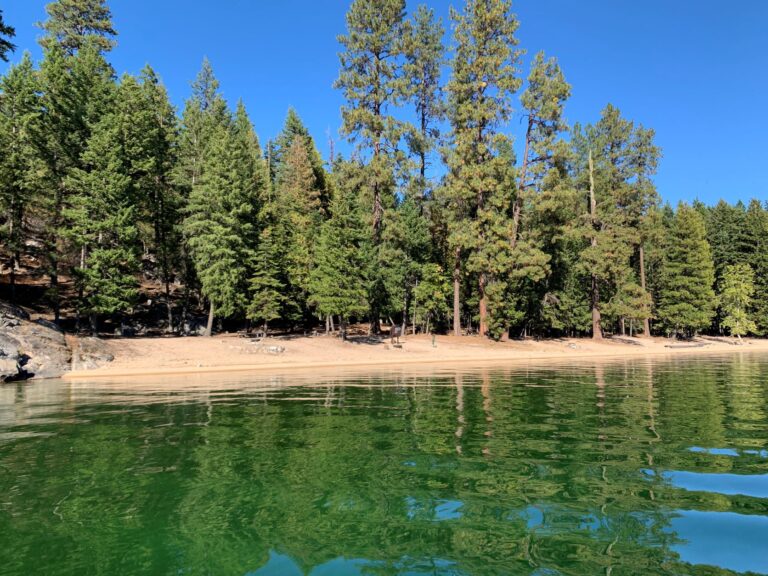
Cover photo by Lara Gricar courtesy of Washington State Parks
As I sit to write this on August 26, 2026, exactly 25 days since the start of the Spokane Complex Fires, the scale of physical destruction and devastation has become increasingly clear: 9,932 acres burned, more than 65,000 people were displaced, and an estimated 833 homes and other structures have been destroyed. One life was lost, and our city continues to mourn while those who lost everything remain uprooted from their homes and pre-fire lives. The numbers don’t do the damage justice, though. For those who suffered the most, it is more than a story of loss; it means lives forever changed.
The alert came a little after noon: Riverside State Park was on fire. I felt the familiar dread rise in me. Another wildfire, another beloved piece of land subjected to fierce flames. As a family member began reading aloud from a developing news article, I glanced at the sky and imagined the coming weeks of smoke and haze, the air quality burning my eyes and throat.
But as the hours ticked on and the fire spread, images of houses ablaze flooded our phones. I watched the evacuation map lines grow. Our phones pinged nonstop with alerts from evacuation sites and texts from friends who were fleeing their homes or preparing to leave.
Somehow, I had convinced myself that wildfires respected the urban interface. Despite historical evidence and other recent tragic fires in Maui and Los Angeles proving otherwise, it had never occurred to me that our city could burn.
While intentionally-set prescribed fires are frequently used on more remote public lands to reduce surface-level fuels and future large wildfire risk, those planned burns are typically set in the spring and fall, when the chances of fire growing out of control are considerably less. Wildland fires close to communities, on the other hand, pose a serious threat to lives and homes, and are a completely different beast.
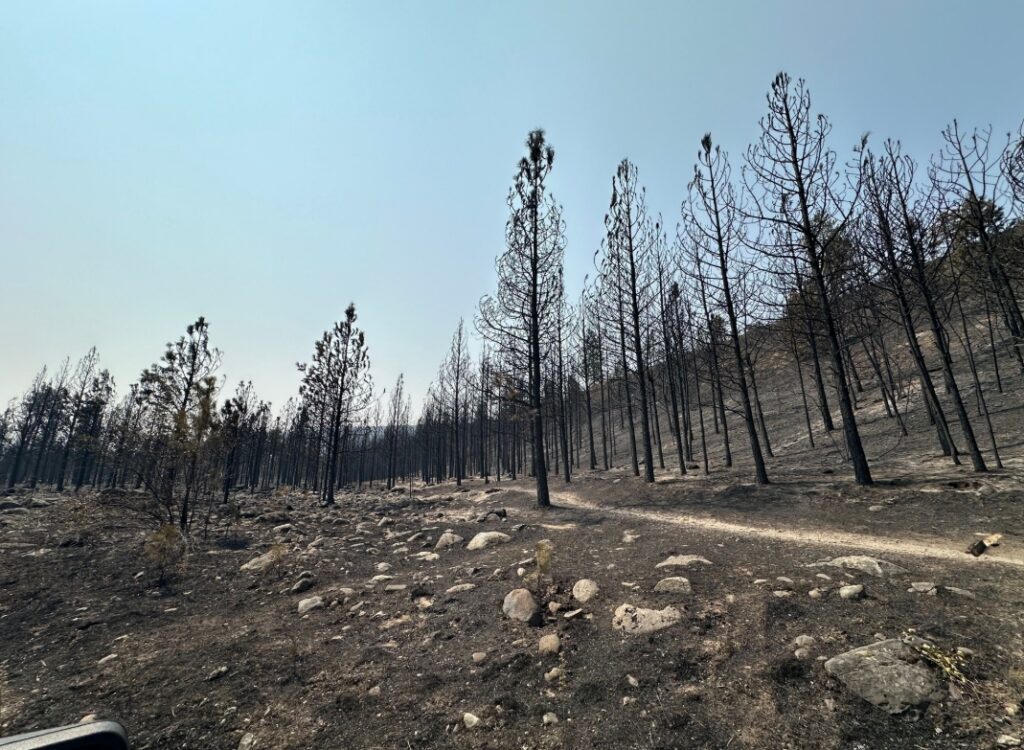
Fires that spread beyond the wildland-urban interface into densely populated areas, as we witnessed with the Spokane Complex Fires, can have devastating consequences—destroying homes, scorching soils and burning large areas of undeveloped forest and wildlife habitat—and must be controlled at all costs. The Old Trails and Autumn Lane fires left behind destruction and a landscape that will look different for years to come.
Washington State Parks communications manager Sarah Fronk says that while structural damage in Riverside State Park was limited to signage, fencing and a picnic area, several spots—including the Bowl & Pitcher area, the Centennial Trail between the Morin and Wilbur trailheads, and the Indian Painted Rocks/Knothead Loop in the Little Spokane River Natural Area—appeared to burn the hottest and suffered the most damage.
City of Spokane Parks and Recreation communications manager Fianna Dickson says that soil erosion is also one of the greatest impacts a wildland fire can have on a natural area. Intense heat can make soil hydrophobic, or unable to absorb water. The complex root systems of trees and shrubs act as natural anchors, holding soil together. When those are removed, the destabilized soil is more prone to landslides and flash flooding.
Combined with steeper slopes, these particular areas of parkland affected by wildfires are more susceptible to ongoing issues, including the City of Spokane managed Westgate Park. “We anticipate erosion issues in some locations where public-land trees were removed and are chipping some hazard trees in place, instead of hauling off for chipping, as an erosion mitigation strategy,” says Dickson.
What Happens Now?
While much of Riverside State Park has reopened, large sections remain closed. State park land managers will continue to work with contractors and foresters to assess the damage and create ongoing mitigation plans.
According to Fronk, “Staff have already started removing dead-standing burnt hazard trees threatening roadways, day-use areas, campgrounds and trails.” But this process takes time, and much about the soil and landscape health won’t be known until next spring.
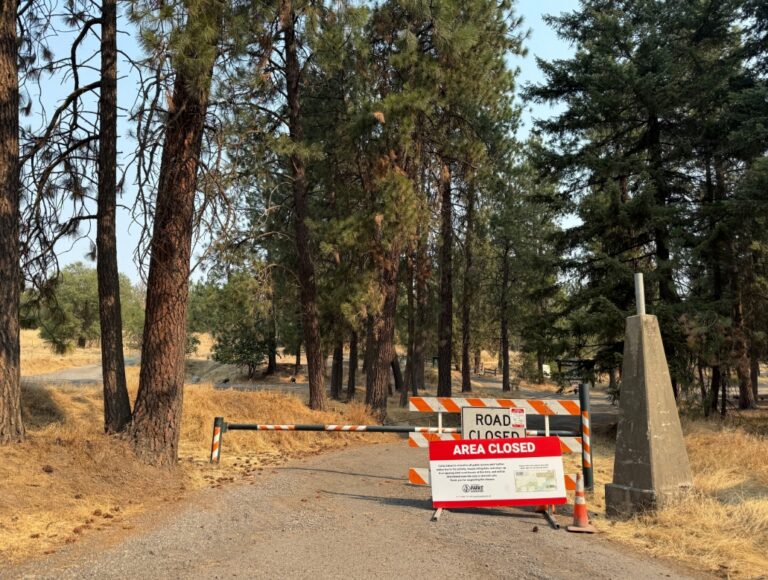
Until then, Fronk urges the public to stay out of all closed areas that pose an extreme risk not only to individuals but also to the landscape. After a catastrophic event like a wildland fire, the land is especially sensitive. “Rehabilitation closures allow the land to rest and recover and give wildlife a place to escape into without the presence of humans,” says Fronk.
The fire may be out, but the recovery is only beginning. For a landscape so deeply woven into the lives of Spokane residents, the scars will be visible for decades. For now, the best thing to do is give the land—and the people who live near it and care for it—the time and space they need to recover.