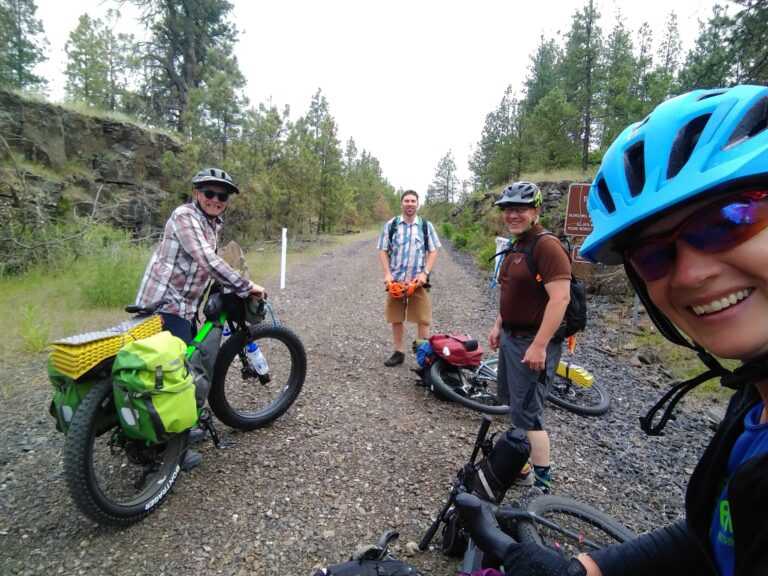
Every year, sometime around when I realize I’ve gained 10 pounds of pumpkin pie, I start signing up for races. I’ll be sitting on the sofa in November thinking, “That might have been excessive whipped cream. I know, I’ll negate it by signing up for a race!” Nothing motivates us to stay healthy and train hard like knowing we have a race coming up. At least that’s the theory. In reality, some random Wednesday in May I’ll get a popup calendar reminder that I’m supposed to be running through the mountains on Saturday. I usually cram in a day or two of effective last-minute training and another slice of pie for good measure, then suffer my way though a commitment. The truth is: Nothing is more motivating than sibling rivalry. So in January when my brother told me he was going to do the 24 Hours Round the Clock mountain bike race, I decided to take my training seriously. Actually, I paid someone to take my training seriously for me. And my quads have regretted it every day since.
My typical training regimen of “oh crap, I better ride my bike this week” was replaced with the expert advice of USA Cycling Coach Kristen Meshberg. Meshberg owns Pedaling With a Purpose, teaches winter indoor training programs in Sandpoint, Idaho, and provides personal coaching services nationwide. I explained my goals and the reality of my previous training history to her. I wanted to find out what happens when you take a lackadaisical bike enthusiast and make her work like an athlete. Will she become an athlete? Will her performance reflect the suffering and sweat and agony and ceaseless appetite of four months? Most importantly, will she leave her big brother in the dust?
Meshberg sent me my first month of training in February and I mistakenly thought it was relatively moderate. Her training plans have a special way of finding your limit and then reintroducing you to it several times in the same ride. It is the closest I’ve ever come to hurling on my bike. And I loved it. A few weeks in, I went to ride the course and the unexpected happened: I rode everything (even that blasted Devil’s Up) without hesitation. In fact, I felt like I had a really mellow pace and I was easily riding the previous year’s race pace — much earlier in the season.
The difference between training and riding, as Meshberg would explain to me, is that riding makes you a good rider, but training makes you a good racer. When you train, you ride hard even when you don’t feel like it. And you let your body recover even when you aren’t sure that’s what it needs (trust me, it does need it). In four-week cycles, we build my training and recover. Every time I think “damn, that week was the hardest week I can possibly do,” she tacks on some new ride or distance that makes me go farther and faster than I thought possible. So far, it has amounted to a great deal of Strava analytics and some serious big brother smack talk. What it means for my performance on race day is yet to be discovered.
For the first time ever, I know that I’ll be ready on race day. I will know that I’ll survive. I will know the suffering to be endured, and that it will come and go a few times. But most of all, I’ll know for certain that I’ve done the hardest part already: stayed committed and trained hard for four months. What’s another 24 hours? //
Editor’s Note: For more information about Kristen Meshberg, contact her at [email protected].