By Karie Lee Knoke
Cover photo courtesy of Karie Lee Knoke
You may think that the foraging season is over. The greens are dried up, the berries are picked and now it’s fall mushroom season. But wait! There’s more! A fall forest has much more to offer than just mushrooms. Let’s look a little deeper and see what we find.
Rose Hips (Rosa rugosa)
Rose hips are yummy and packed with vitamin C, up to 10 times more than oranges. They can be made into tea, jellies or even eaten fresh (skin only, as the seeds are hard). I wait until the first frost to harvest them. They will become soft and sweet as the sugars release once frozen.
Both hips and petals support the immune system and relieve stress. Rose hip tea is a nourishing daily tonic in colder months, while rose petals are known for their emotional healing qualities, often used in heart-opening blends. The energetic properties of rose support love, joy and emotional wellness.
Bearberry (uva ursi)
The berries can be collected in late summer and fall. The leaves, which are used medicinally, can be gathered throughout the year because the plant is evergreen.
The leaves are the primary medicinal part of uva ursi. They can be brewed into a tea that stimulates urination and cleanses the urinary tract. It is antiseptic, inhibiting the growth of certain bacteria. It has been used to treat kidney and bladder problems, urinary tract infections, bronchitis, diarrhea, gonorrhea, bleeding and lower back pain. It has a mild vasoconstricting effect on the uterus, helping to relieve menstrual cramps.
Uva ursi leaves are often included in kinnikinnick, a traditional smoking mixture used in spiritual practices.
Bulbs (chocolate lily, yellow bell fritillaria, mariposa (sego) lily, tiger lily, glacier lily)
You must dig deep for this one! Pun intended. The flowers are long gone for identification, so you must know what the seed head looks like. The flowers and bulbs of these lilies are edible. To gather, take a skinny spade and dig a few inches around the stem until you reach the bulb. Be very careful and make sure the bulb is attached to the stem so you can 100% positively identify that it is the intended lily bulb and not a bulb from a death camas, which could be growing next to it.
They are absolutely scrumptious and have a nutty flavor. You can eat them raw, roasted or boiled, but they are best cooked. These bulbs are prized for their high-carbohydrate content.
Acorns (Quercus species)
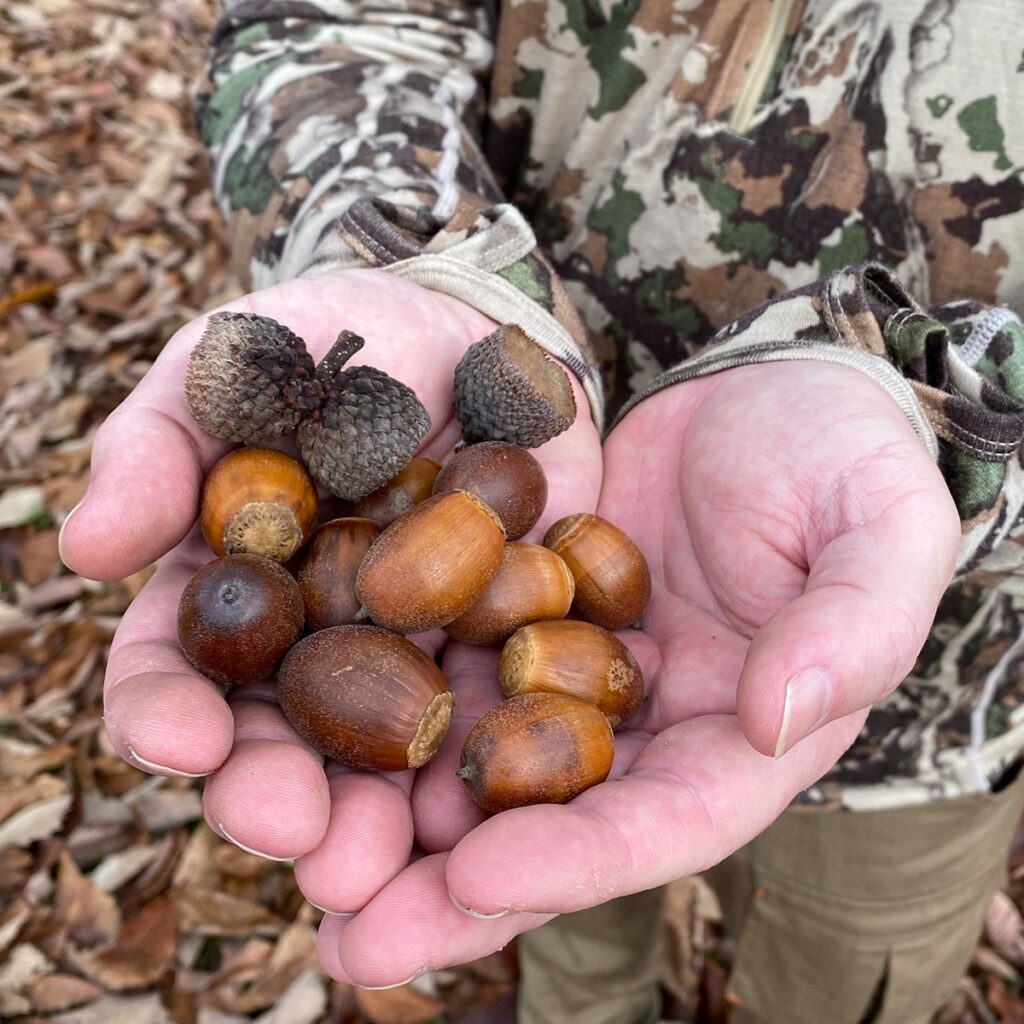
Acorns, the nuts of the oak tree, are a fabulous source of fiber, carbohydrates and antioxidants. But they are also high in tannins and bitter, which is hard on your gut and taste buds. You must leach acorns correctly before eating them.
To process acorns, take the raw, shelled acorns and boil until the water is the color of a strong tea. Strain the nuts and boil again. You may need to do this multiple times until the water boils clear. Once leached, you can dehydrate and grind them into flour for bread, pancakes or whatever your tummy desires. Make acorns your gluten-free alternative.
Check out my “Wild Foraging Pocket Guidebook” to learn more about finding wild food, and always be sure to 100% positively identify a plant before eating!
Karie Lee Knoke is a wilderness/primitive skills instructor and founder of Sacred Cedars Wilderness School. She was a contestant on the reality survival TV show, “Alone” Season 9, on the History Channel. For more information, visit Karieleeknoke.com or follow her on Facebook @SacredCedarsWildernessSchool or Instagram @karie_lee_knoke.