Keeping Spokane Wild
Cover photo courtesy of Spokane Urban Nature
Spokane is fortunate to have so many urban natural areas scattered about the city. While many of the larger city parks, like Riverside, Palisades and High Drive Bluff, have had nonprofit organizations advocating for their conservation for years, other smaller parks with abundant native plants and wildlife didn’t have their own dedicated citizen voice drawing attention to their unique natural values.
That began to change when a handful of Spokane residents with a passion for Spokane’s urban natural areas came together in 2022 to form Spokane Urban Nature (SUN). SUN’s focus from the start has been on undeveloped areas of Spokane parks where native plants and animals live, human impact is limited and wild features and natural processes are kept intact as much as possible, says SUN volunteer Kirsten Angell.
The group got its start advocating for the protection of natural lands in Upper Lincoln Park on Spokane’s South Hill. The park, says SUN member Amy Dawley, is home to several plants that are rare or haven’t been found in other natural areas within the city, including bitterroot, thin-leaf lomatiums, camas, glacier lilies and many other plant species. “I just know from experience when you have these sensitive plant communities—like camas meadows or bitterroot that grows right on the rock—once they’re gone, we can’t re-establish them,” she says. Lincoln Park is also used by many resident and migratory species of birds, adds Angell. “Urban natural areas provide an important, sometimes vital, respite for birds moving through the landscape on their migration routes.”
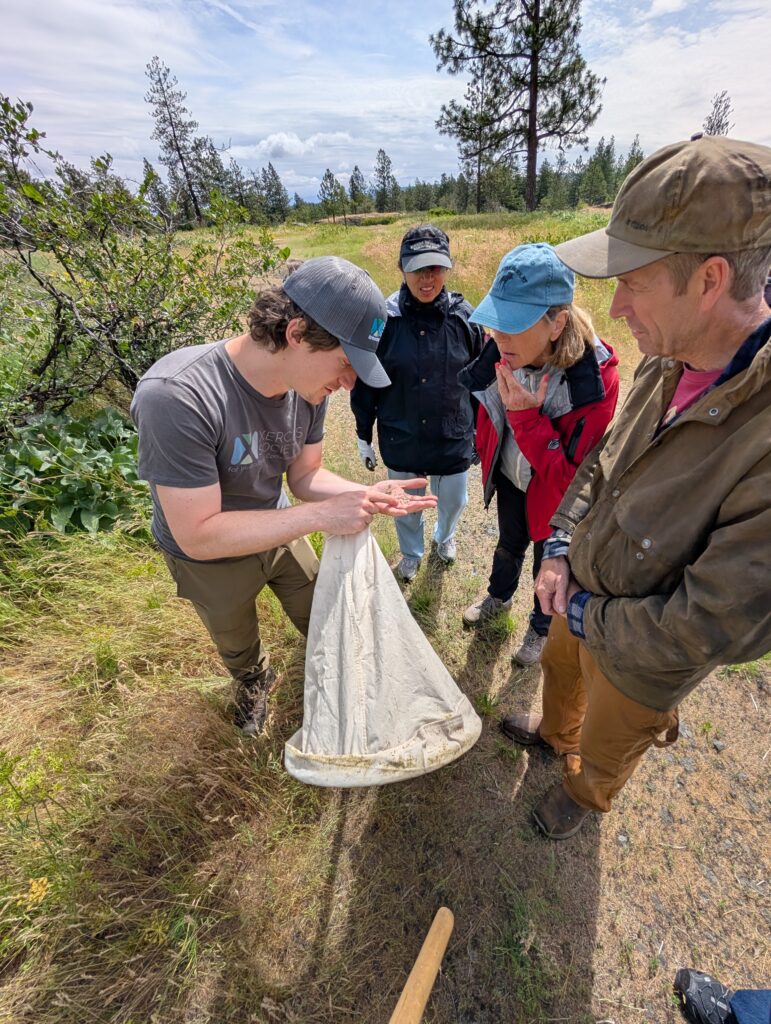
In about 2023, Angell says, “It became clear to us that Spokane Parks and Recreation would benefit from citizen input about public lands that have a high value as natural areas.” SUN began advocating for other natural areas around Spokane, including Underhill Park and the Thorpe Natural Area, which led the group to ask Spokane Parks to create a natural lands management plan, which Angell says the agency committed to doing in 2027. SUN volunteers are also lending support during that process as subject matter experts, she adds.
“We are currently focused on efforts to protect natural lands in Spokane’s Comprehensive Plan update and the revised Critical Areas Ordinance,” Angell explains. “We review policy and news, attend public meetings, offer our expertise and often testify on behalf of protecting our natural lands—being a voice for the voiceless plants and wildlife that are part of our community.” Other city parks with unique natural values that SUN has focused on so far include Drumheller Springs and Hazel’s Creek.
SUN recently became a 501(c)(3) nonprofit organization, and the eight-member board meets monthly, with periodic member meetings. According to Angell, most of the group’s outreach happens via email and through organizing educational community events such as Nature Day at Lincoln Park. SUN’s mission, which calls for preserving walkable parks and urban green spaces and the conservation of natural lands near the city for wildlife habitat, nature education, outdoor recreation and open space, is a critical one that will only become more important as the region continues to grow. Learn more and get involved by joining SUN’s Facebook group.