By Sara Kennedy
Seattle-based environmental journalist Lynda V. Mapes takes us on a multi-pronged trip across the U.S. in her 2025 book to explore the past, present and potential futures of the old-growth forests.
Starting on the West Coast, we are led through several old-growth forests in Oregon and Washington. Mapes helps us discover the complexity of these forests, particularly in the ways an old-growth Douglas fir (reaching sometimes 1,000 years old) plays an integral role in the ecosystem, both during its living years and for centuries after.
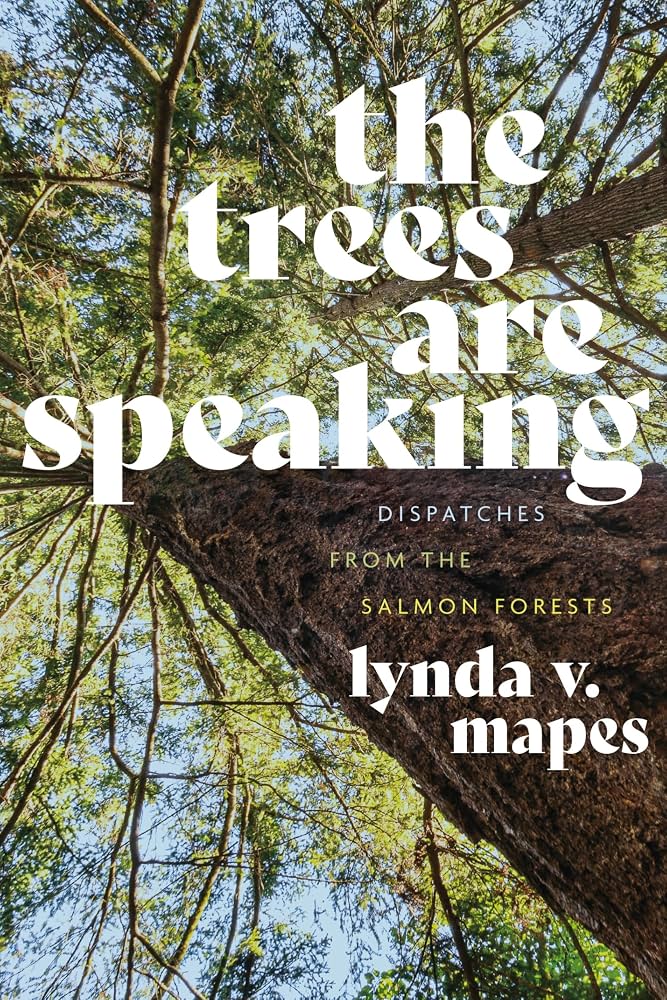
Beyond the trees themselves, Mapes describes the vast entanglement of plants, salmon, water and fungi in ways both surprising and awe-inspiring. Did you know that trees can send their photosynthetic products to other trees through the fungal networks connecting their root systems? Amazing!
Next, we are taken on a historical tour of forestry management practices. Generations of clear cutting with herbicide application on the barren land, followed with the planting of young homogeneous trees, turns out to fall far short as a viable forest replacement. This book finally made it crystal clear to me why the U.S. Forest Service is part of the Department of Agriculture!
Finally, Mapes takes us to Maine, where hundreds of years of unrestrained clear cutting for sawmills and paper factories pushed the environment and local economies to near collapse. Through her thoughtful interviews and discussions with various stakeholders, the stage is set to present this issue as indeed complicated. This is not a simple decision of cutting versus not cutting. Trees, loggers, environments and economies all matter. We are introduced to a new generation of forest workers dedicated to providing for all, who truly understand that everything is connected. And that should give us all hope.