By Adam Gebauer
Cover photo courtesy of Adam Gebauer
Snakes can bring up a lot of emotions in people. They show up in many religious and cultural references as bad omens. Some with diamond heads and a few striped ones are venomous. They look and move like no other terrestrial animal, almost swimming across the ground, and many are actually good swimmers, burrowers and excellent climbers.
I have memories of my early days as a climber in New England finding a small garter snake curled up on my next handhold. As I reflexively retracted my hand, I wondered how it made it midway up a climb that I struggled on. They do all of this locomotion without any appendages. Or maybe it’s that their whole body is one strong appendage.
I know that even these descriptions will cause some people to tense up, but let me tell you about a snake that I have learned to love (well, greatly appreciate). The bull snake, also known as the gopher snake and Pituophis catenifer, is one of North America’s longest and heaviest non-venomous constrictors, reaching up to 8 feet long. They range from the Midwest to the Pacific and from southern Canada well into Mexico with several subspecies occupying these different ecosystems.
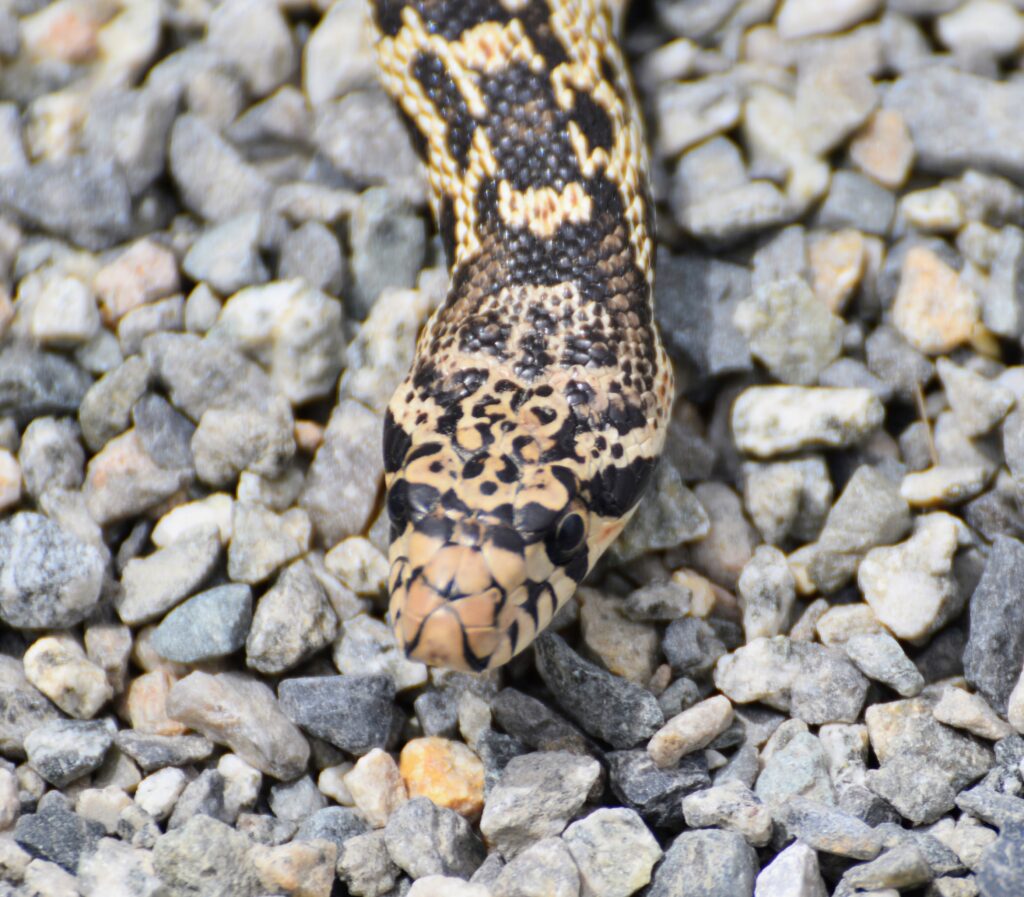
Like many snakes, they have strong jaws connected by ligaments that allow them to swallow large prey. Bull snakes have large snout scales that allow them to burrow for rodents and a raised central ridge of scales that allows them to have increased traction for burrowing and crawling. When they are being defensive, they make a raspy sound similar to the sound of a bull snort and can mimic the tail shake of a rattler.
Although they can act and sound similar to rattlesnakes, they lack the rattles on the tail and have a narrow, oval-shaped head. Their eyes are round and to me seem friendlier compared to the vertical slits of a rattlesnake.
But like many species of wildlife, it’s not really all these factoids that lead to an affinity for this snake; it is the many encounters that I’ve had. Being a field biologist and wilderness trip leader in my early 20s in New Mexico, I came across a countless number of snakes. I quickly learned through my impressionable readings and being let loose in the vast Southwestern wilderness how to identify the bull snake and to welcome their presence.
Bull snakes rarely bite humans and are known to keep rodents and rattlers away from their territory. The famed writer and wilderness defender Edward Abbey writes at length in “Desert Solitaire” about his encounters with and befriending of a bull snake. During his stint in Arches National Park, rattlesnakes take up residence under his house trailer. Abbey brings in the cavalry by catching a bull snake, carrying it around in his shirt to keep it warm and employing it to chase out the rattlers and mice that were occupying his home. The snake was seemingly so charmed by the hospitality that it returned with a mate, and Abbery describes an intricate and romantic courtship display.
Since then, not a summer has gone by when I haven’t seen a bull snake, picking up more than a few out of roadways or backyards to safely relocate them. All of this and somehow, I still magically teleport 10 feet in the opposite direction whenever I hear anything even approaching a rattlesnake, but I do stop to look at what species has made that distinct sound. If it’s my old friend the bull snake, I spot and thank it for its service in keeping the less desirable and more dangerous wildlife away.
Lately, Adam has been trying to be as waterlogged as possible. Whether it’s trying to negotiate with beavers in their ponds, swimming across a clear lake, or bobbing the packraft along some whitewater, he’s been doing his best to escape the heat as much as possible.