Reading nature’s snowy signatures
By Karie Lee Knoke
Winter transforms the landscape into a blank canvas. Fresh snow covers the ground, softening every edge and silencing the world. But for those who know where to look, this quiet season reveals a secret language. Tracks, trails and signs left by animals going on about their lives. Tracking in winter isn’t just about identifying footprints; it’s about reading the story of survival written across the snow.
The Art of Seeing While Wildlife Tracking
The first rule of tracking is to slow down. Walk quietly, notice patterns and let your eyes adjust to the subtleties of snow. A crisp, clean snowfall is a tracker’s dream, capturing every step, slide and wingbeat in fine detail. But even days after a storm, melted and refrozen impressions can tell as much about time and behavior as they do about species.
Early morning is the best time to head out. The light is low and slanted, casting long shadows that make shallow impressions easier to see. A hand lens or small ruler helps measure track size and depth, and a notebook or phone camera keeps a record for later study.
Reading the Clues
Each track carries a signature combination of shape, stride and pattern. The spacing between prints tells how fast an animal was moving; the depth hints at its weight, or the preparation of a pounce; and the symmetry reveals its gait.
Deer leave two neat, heart-shaped prints, each about 2 to 3 inches long. In soft snow, their hooves cut deep and sharp. A wandering line means the deer was browsing for twigs, while a direct, steady trail suggests it was traveling between feeding and bedding areas.
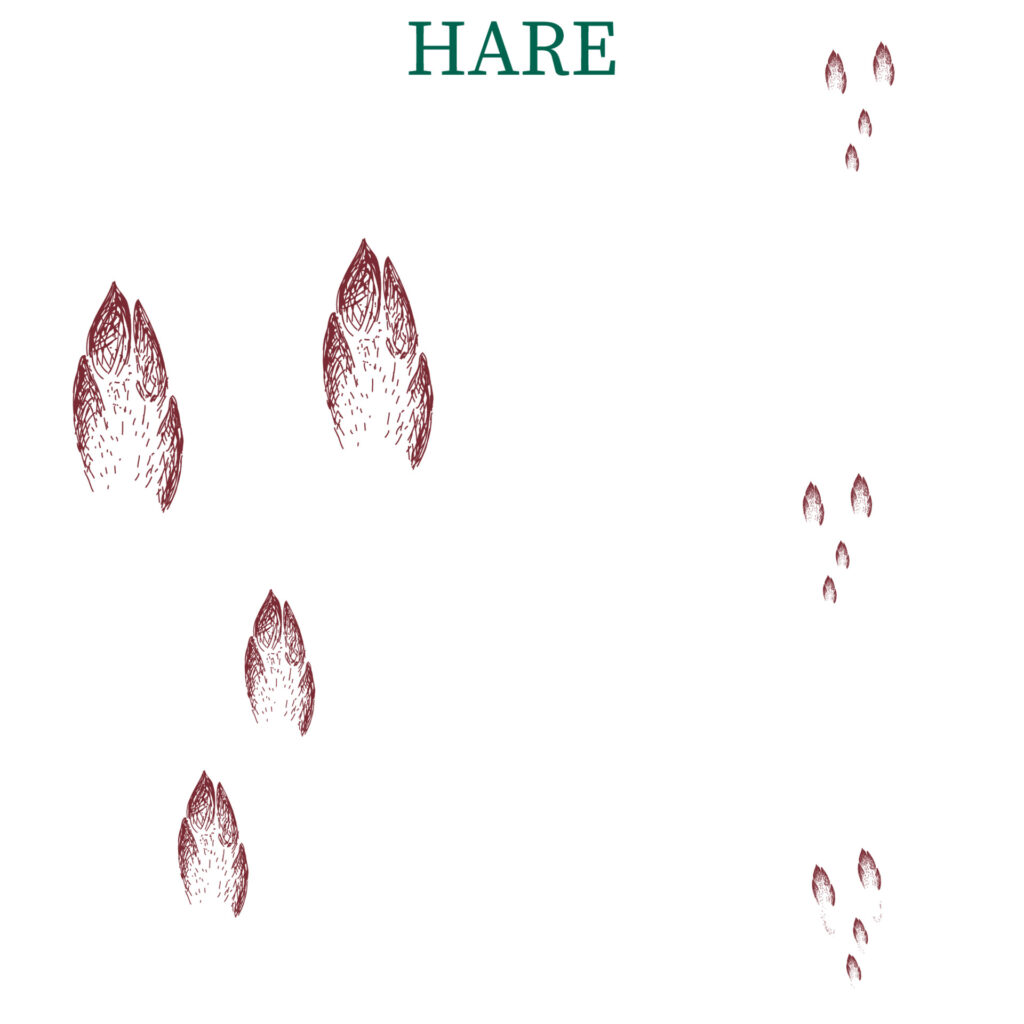
Snowshoe hares print in a distinctive pattern: two large hind feet land ahead of the smaller front ones as they hop. Their tracks often appear in clusters, each group marking a single bound. Look for them near thickets, brush piles or the edges of open fields where they feed at dusk and dawn.
Bobcats and mountain lions walk with a smooth, straight pattern, often along brushy edges. When trotting, you’ll see alternating left-right prints. When stalking, they tighten up and sometimes overlap perfectly, called “direct register walking.” Their prints are round, with no claw marks as they have retractable claws.
Squirrels leave tracks that seem almost playful. Their large hind feet land ahead of the smaller fronts, creating a leapfrog pattern that leads from tree base to tree base. Scattered bits of cone debris nearby mark feeding spots, often called “middens.”
Following the Story
Winter tracking is less about finding the animal itself and more about understanding its habits. Every trail is a mystery of motion and intention. As in a “whodunit” story, embrace the inspector role: Who? What are they doing? Where are they headed and where did they come from? When or how long ago? And why?
Let the mystery unfold as you take in all the signs that you see, hear, smell and feel. If you’re following fresh mountain lion tracks, I suggest following them back from where they came, not to where they were headed. Best not to find yourself face-to-face with one!
Spend enough time tracking and the forest begins to speak in a new language. What once looked like an empty white field becomes alive with paths, decisions and dramas unfolding in silence. You realize you’re walking through a world in motion, one that never really sleeps.
So the next time fresh snow falls, grab your boots and head outside. Slow down, look closely and follow the prints. Every mark in the snow is a story of survival, and in reading them, you become part of that story too.
Karie Lee Knoke is a wilderness and primitive-skills instructor and founder of Sacred Cedars Wilderness School. She was a contestant on the reality survival TV show, “Alone,” Season 9, on the History Channel. For more information, go to Karieleeknoke.com or follow her on Facebook @SacredCedarsWildernessSchool or Instagram @karie_lee_knoke.