Helping kids build resilience and learn to love the ski hill
By Bri Loveall
Cover photo courtesy of Bri Loveall
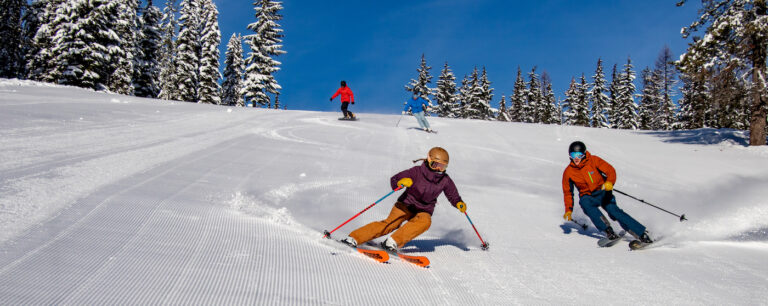
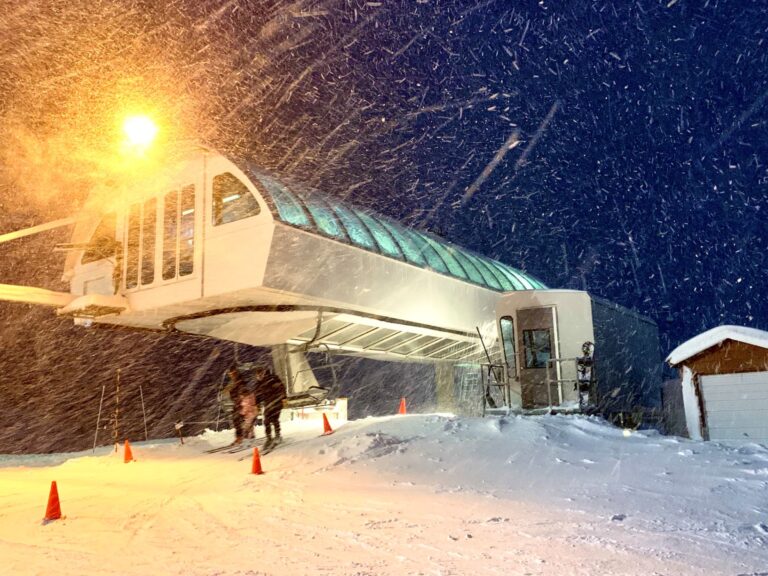
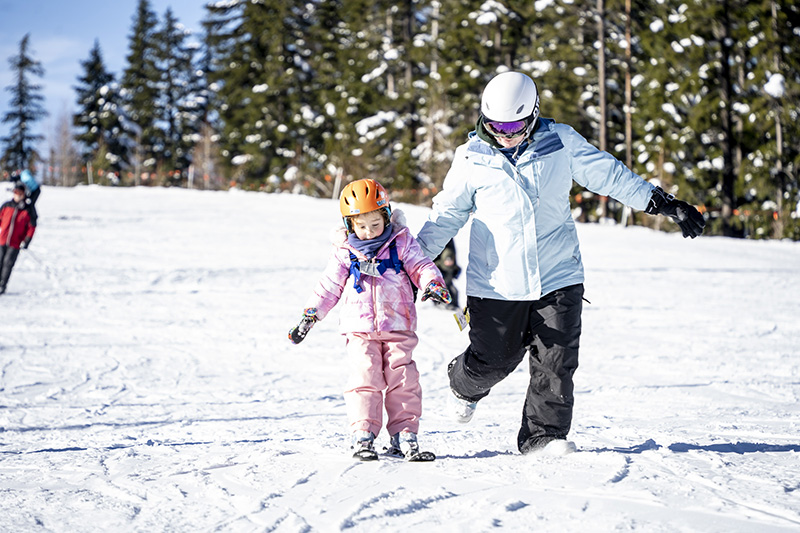
Before teaching my kids to ski, I received a lot of really helpful advice: private lessons, ski school, hula hoops instead of ski harnesses, and even recruiting a grandparent. Last fall, we finally committed and rented season-long skis and boots from our favorite ski shop. The day after Thanksgiving, I packed a bag with more snacks than seemed necessary, loaded the gear into the car, and drove the kids up to the mountain for our first day on the snow.
By then my children had taken about three lessons (which they seemed to forget the moment they clicked into their skis). I envisioned watching them glide down the bunny hill, laughing and waving as they tipped and then righted themselves. Instead, I found myself chasing after my older child, certain she’d run into someone. My youngest child managed to do a single run (while I held him up) before deciding he’d rather play in the snow instead.
It’s fine, I told myself. It’s only the first day. As the season progressed, my commitment deepened; we were going to be a ski family and the outdoors would be our teacher.
So much of what we teach our children is physical—how to tie shoes, tidy a room, catch a ball—that we forget what we are really teaching them is resilience. How to keep going even when they are uncomfortable, even when they fail and fall, when they’re cold and bored and tired. We are teaching them to embrace discomfort.
Frequently, as a parent, I recognize within myself a limited tolerance for discomfort. The second my children begin whining (a normal childhood behavior that’s actually indicative of healthy emotional maturation), I think I’m causing some irreversible damage to their premature egos, and I want to quit. Children learn best when environments are fun and relaxed, when big tasks are broken down into small ones and when snacks are plentiful. But that doesn’t mean the learning is easy. And last season I learned that there is an art to discomfort.
Crammed into our car (we have yet to invest in ski racks) with gear wedged into every nook and cranny, each weekend we made the trek up the mountain while the kids bickered in the back seat. It was hot, it was cold, their legs were sore. They were hungry, they were tired, they’d rather be home watching a show.
In the parking lot, the wind whipped through the open doors and they shouted and shoved at each other as they all tried to dress in the same limited space. And we hadn’t even reached the worst part—ski boots. “You’re breaking my foot!” my youngest hollered, as other ski-ready families walked past. My own fingers were halfway frozen, struggling to hold my son’s boot open while I patiently coaxed him to shove his foot in.
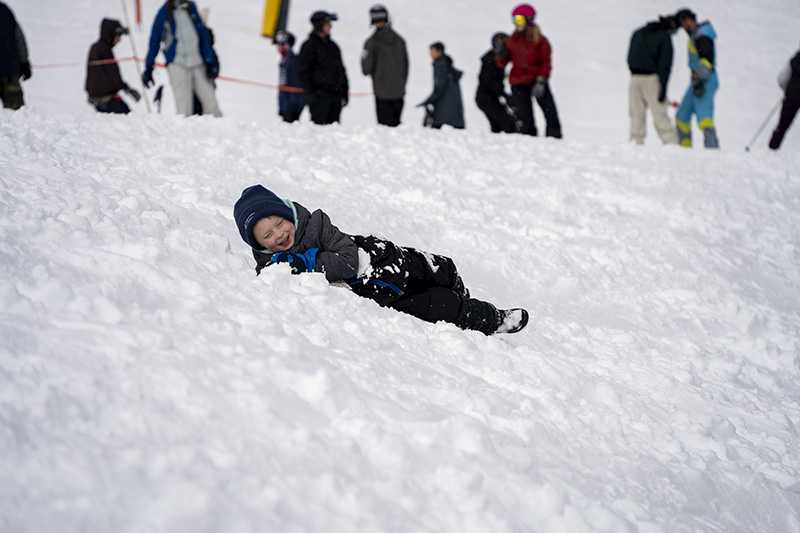
Once dressed, we still faced the walk from the car to the lift. “Here, kids, carry your own helmets, OK?” I’d say in my best Julie Andrews voice, stuffing extra gear and snacks into my backpack before grabbing their skis (and mine). “It’s too heavy. It’s too cold. It’s hard to walk in boots,” they groaned, lagging behind me. By the time we reached the bunny hill for lessons, I was ready to pass off my children to the instructors and find any excuse to escape into the lodge, where I could try to regain my Julie Andrews voice.
All of us have a threshold for being uncomfortable, and yet we rarely think of it as a muscle that also needs to be stretched and strengthened. Because, let’s be honest, some days the skiing (or the hiking, camping, swimming, biking) just sucks. The weather is too cold or too hot, too wet or too smoky, and our kids are tired and we’re tired and no one—I mean no one—is having fun. I might argue that those moments are the most important in developing a lifelong commitment to the pursuit of adventure.
The advice I would give to parents is this: acknowledge the sensations your child is experiencing (cold, wet, fatigue, boredom) and then encourage them to keep going. When we mirror a tempered version of our child’s emotions, we validate them, and in doing so, create a safe space for them to practice navigating their discomfort.
One Saturday last year, my youngest had a full-on meltdown in the middle of the crowded lodge. While onlookers tried not to stare as I began gathering our wet hats, lunch trash and helmets, one mom at the table nearest to me met my eye. “It gets better,” she said, gesturing to the teens situated around her. “Eventually, they learn to love it.”