By Madonna Luers
Cover photo courtesy of Tom Munson
Birds surround us all year in the great outdoors of the Inland Northwest. That’s what makes birdwatching—or “birding” with both your eyes and ears—so wildly popular and easy. But spring is prime birding time because species that spent the winter farther south are migrating back to or through our area, so there are a lot more different kinds of birds around.
If you’re just learning to distinguish birdsong, spring is also a great birding time because you can see more birds before trees and shrubs leaf out completely and cover them up. You can check out when to look and listen for what kinds of birds in the Spokane Audubon Society’s annual calendar. Along with photographs of local birds, it includes notes on phenology—the study of seasonal natural events and their cycles, including bird migration and nesting.
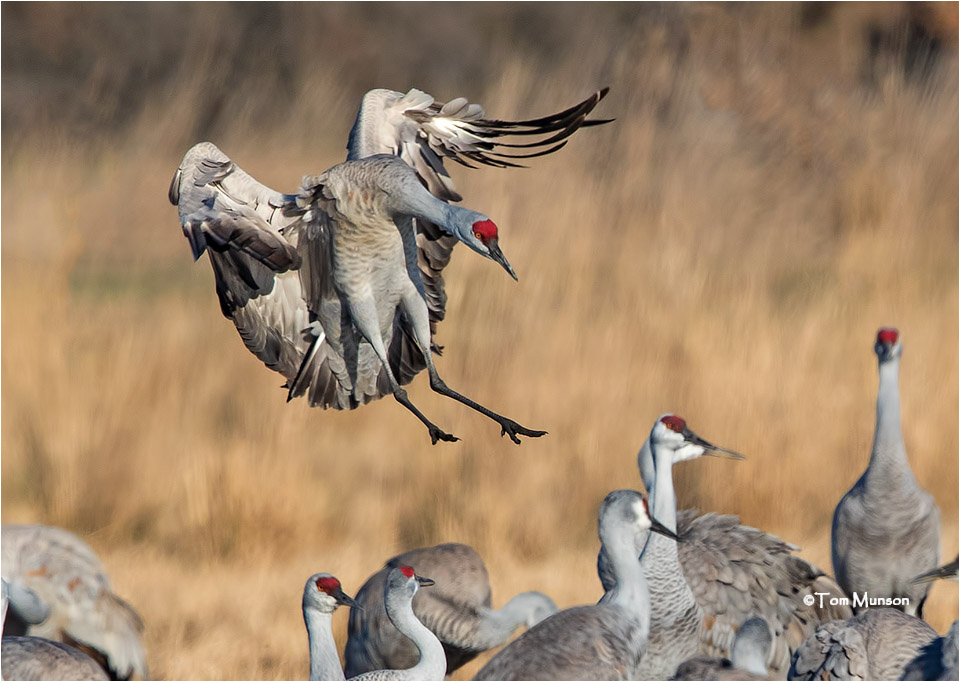
Thousands of big sandhill cranes that you don’t even need binoculars to see make their annual northbound migration stopover in the Columbia Basin in late February and early March. Another big species that’s easy to spot at this time are tundra swans, heading for nesting areas in the tundra of the far north.
Our farmlands and ballfields provide nesting grounds for returning killdeer, the big-eyed, long-legged plover, slightly bigger than a robin, whose strident, high-pitched “kill deer” call can’t be missed. Beautiful western bluebirds are also returning now and will readily try to raise new families in nestboxes provided in open areas where they hunt insects on the wing.
Later in March and early April, violet-green and tree swallows and yellow-headed blackbirds begin returning. By late April and through May, colorful hummingbirds, kingbirds, warblers, flycatchers and other migrant birds are back. It’s truly a “procession of the species.”
Our lakes and ponds, rivers and streams, and marshes and wetlands are magnets for returning waterfowl and shorebirds (as well as virtually everything else that needs water!). That’s where many of Spokane Audubon’s spring birding field trips take place, including Turnbull National Wildlife Refuge near Cheney, Saltese Flats Wetland in Spokane Valley, Reardan Audubon Lakes Wildlife Area in eastern Lincoln County, Medical Lake west of Spokane and Little Spokane River Natural Area north of Spokane. These short (half-day or less), free events are open to everyone of all ages and are truly the best way to learn birds alongside experienced birders (event info at Audubonspokane.org/upcoming-events).
With so many newcomers to our landscape in spring, it’s a good time to try using free bird identification applications on your mobile device to figure out who’s who. Cornell University’s Lab of Ornithology “Merlin” app is particularly good at pinpointing species based on sound recordings from your phone. If you really get into birding while you’re playing in our great outdoors, you might try using Cornell’s “eBird” app to keep track of what you see or hear and report and share with others.
And consider joining the Spokane Audubon Society to support local advocacy for birds and their habitats as well as efforts to connect people with nature. We can even show you how to make and put up that bluebird nestbox! If you love spring outdoors, you love birds!
Sponsored by the Spokane Audubon Society. Learn more about upcoming birding and other nature outings and volunteer projects at Audubonspokane.org.