By T. Ghezzi
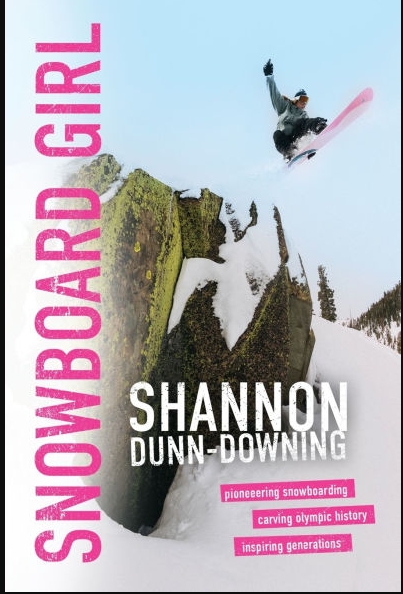
Growing up in Spokane and snowboarding in the early ’90s, there were very few female riders. The memoir “Snowboard Girl” by Shannon Dunn-Downing clearly took me back to my early years of snowboarding. It also brought to mind a local female rider my age, Casey Wiese, whose dedication and drive enabled her to carve out a place for herself in the male-dominated snowboard industry for years.
I believe it’s important to mention this because in “Snowboard Girl,” Dunn-Downing peels back her personal journey through snowboarding’s most defining decade of the ’90s. Sadly, snowboarding has a long history of discrimination and sexism toward women. Dunn-Downing details the pressure to prove herself, the realities of industry politics, a legendary party with the Beastie Boys and her road to winning a bronze medal in halfpipe at the 1998 Nagano Winter Olympics, becoming snowboarding’s first American Olympic medalist. She also shares her role in creating one of the most iconic snowboard graphics, designing women-specific gear and apparel and pushing women’s riding in the halfpipe by landing several groundbreaking tricks. Most importantly, she reveals the raw truth of what it really took to rise in a snowboarding industry that didn’t always make room for women.
One tale of her life that really stood out to me was her move from Sims to Burton and the negotiations surrounding her contract. I deeply related to Dunn-Downing’s struggle with knee injuries and the mental fight it took for her to return to riding, notably the long hours spent in a CPM machine after tearing her ACL.
Don’t be fooled by the simple title of the book, as Dunn-Downing masterfully guides readers through her story as one of the most legendary female snowboarders.