By Bri Loveall
Cover photo courtesy of Bri Loveall
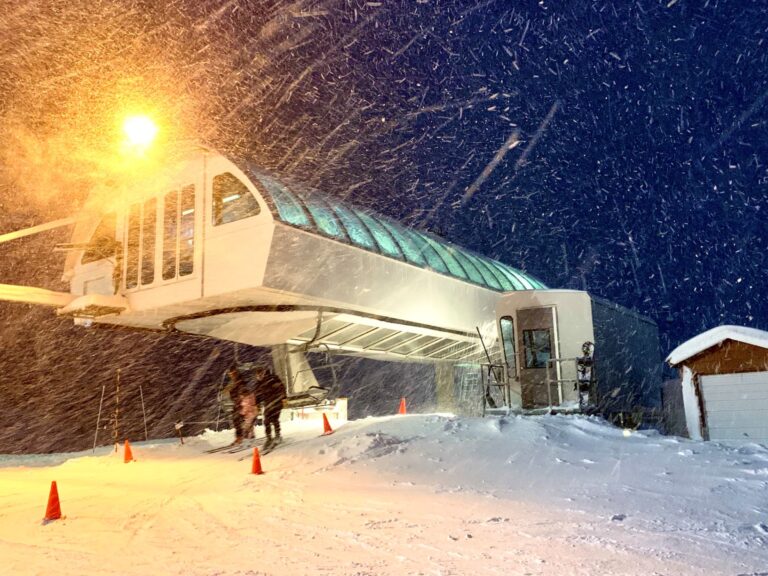
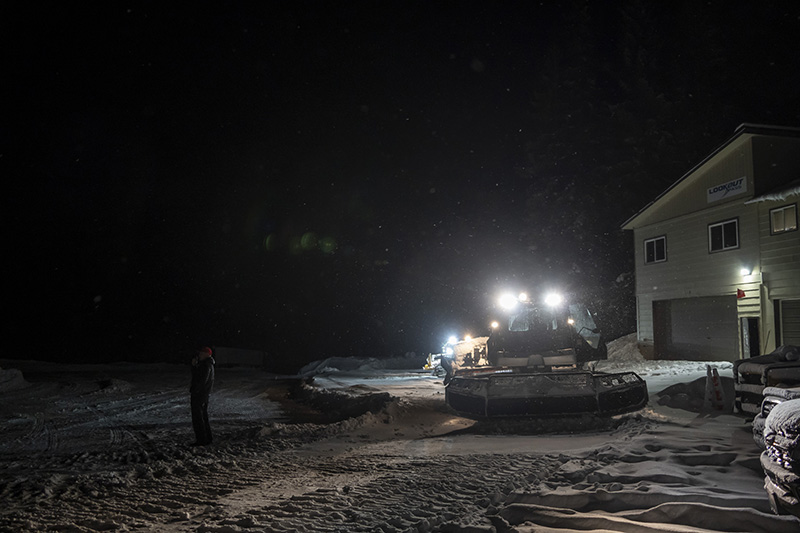
One cold, snowy morning last winter, I woke hours before the mountains would transform into a kaleidoscope of pinks and blues, more commonly known as alpenglow, and made my way to the base of Lookout Pass to join the snowcat operators for a morning of work.
That early morning, the lights from the snowcats were like beacons in a vast ocean of night. Brian Rosser, general manager of Lookout Pass, ushered me into one of the five cats Lookout Pass normally operates, a spacious, well-heated cab with plenty of leg room and a whole dashboard of complicated-looking switches, levers, knobs and controls.
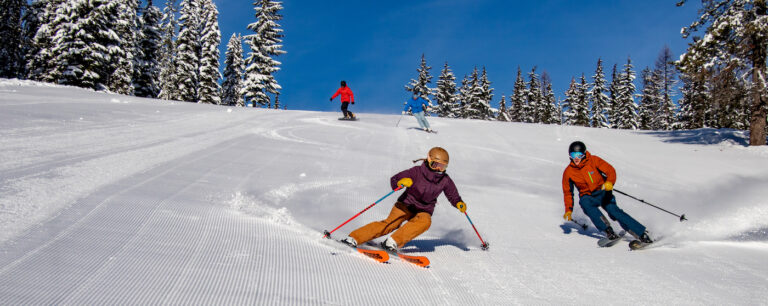
At its core, snowcat operators, or groomers, have the incredible task of mechanically manipulating snow to maintain ski slopes for efficiency, safety and fun. They are the unsung heroes of the mountain, and, as Rosser informed me, snow grooming is a lot like housework; you only notice it when it isn’t done.
Recreational skiing in the U.S. has only been around for the last 150 years, with the earliest ski resort opening in Colorado in 1915. As resorts opened and recreational skiing took off, resort owners quickly realized they needed some way to shape and maintain the slopes. Some of the earliest grooming was the responsibility of ski patrollers who would either boot or shovel pack the snow to form smoother runs. But it wasn’t until the 1950s that an invention would change the way ski resorts handled slope maintenance.
The Bradley Packer-Grader was the creation of the executive director of Utah’s Winter Park Resort, Steve Bradley. An adjustable blade at the top of the contraption sliced the tops off moguls while a slat roller followed closely behind, turning and flattening the snow. The only catch? The device weighed several hundred pounds (some sources say as many as 700) and was operated by skiers in the front. Bradley’s fleet of groomers became the evolutionary step in the automation of the modern-day snowcat.
Military and expeditionary units had been in the process of designing over-snow vehicles for decades. By the 1960s, early snowcats were pulling Packer-Graders, rollers and other DIY contraptions to manage and maintain the snowy slopes. Today’s snowcats are precision instruments that can cut through ice, reshape trails, create those beautiful corduroy lines we all love, and handle the steep inclines of the mountain thanks to their low center of gravity.
By the time the first lifts start running, the snowcat operators’ work is done for the day. Operators like Rosser and his team ensure that each skier’s experience is safe, consistent and exciting. The next time you glide down a perfectly groomed run, give a shout-out to the groomers who are doing the night work to make sure the memories happen.