By Adam Gebauer
Cover photo courtesy of Adam Gebauer
Sometimes it takes multiple chance encounters with a species to really focus your attention—in this case, a few species collectively known as biscuitroot or Lomatium.
It started when I noticed a few new green shoots coming up in my xeriscape front yard. I frequently grab native seeds on my wanders, throw them around my place and wait to see what happens. As they started to get bigger and their features became more distinct, I realized they were not unwanted weeds but the early blooming Lomatium triternatum, also known as nineleaf biscuitroot.
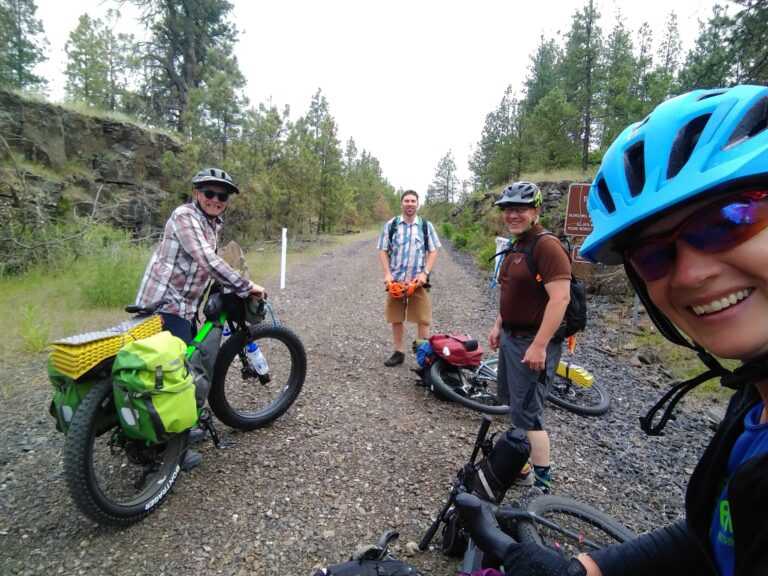
During the second encounter, I was hiking the Ferry County Rail Trail in Northeast Washington with renowned local author and naturalist Jack Nisbet. We were testing the power of my plant ID app, Seek, against both of our botanical knowledge. Jack asked me to see how well this app could ID a small, rare lomatium growing out of the rock cliff. The app got close but was wrong on the first try, but when I reangled the picture it came up with Geyer’s Desert-parsely, Lomatium geyeri, a new species for me.
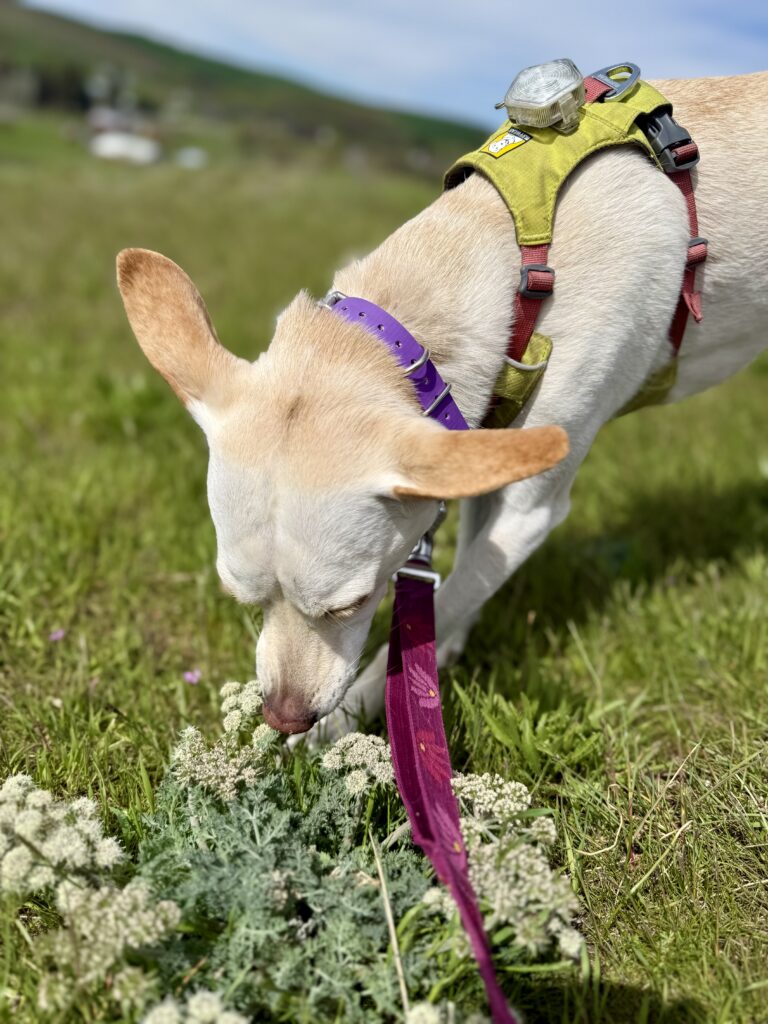
On another outing, coming back from a site visit investigating the work of some industrious beavers on a culvert near Deer Park, I stopped at Spokane’s Drumheller Springs Park to let the dog out. Even though this park is so close to my house and I drive by it constantly off Ash/Maple, and a decade ago I even did plant surveys there, I had not been there in ages. On this stop, it was carpeted in both yellow flowers of nineleaf and white flowers of bigseed, Lomatium macrocarpum. At the same time, my partner texted a pic of her dog nose deep in these very flowers with the questions, “What is she eating? Is she gonna get high?” I love when my obscure plant nerdiness comes in handy.
Biscuitroot flowers can carpet open areas in early spring, creating opportunities for pollinators before most flowers emerge later in the season. It is also a spring and summer forage for deer and elk, and the seeds are readily collected by birds and sometimes humans—like me.
Biscuitroot species are in the carrot family, Apiaceae, and as the common name suggests, these are important cultural foods for the Salish people of our region. (Be warned not all plants in the Apiaceae family are edible.) Tribes in the region know to eat the early spring leaves like salad greens. They grow taproots similar to carrots, and the young roots are referred to as Indian candy or licorice root, but can also be used like celery to flavor meats and stews.
Biscuitroots have important medicinal and cultural aspects. They have very high levels of vitamin C and various tribes chewed the seeds to treat respiratory issues, sore throats and colds. The seeds are also burned to fumigate houses and for salmon ceremonies. Mixed with other plants, biscuitroot is used to help ease childbirth, treat back pain and soothe sores and scratches. It has been used as a deodorant and for good luck in love—these might go together.
It is known that the tribes actively transplanted various species of biscuitroot and in some cases on Washington’s coastal islands their only known locations are associated with Salish settlements. This makes me wonder how prevalent biscuitroot would be in this area without thousands of years of local tribes cultivating this important plant.
Adam Gebauer is the Public Lands Director at The Lands Council. On top of overbooking his summer with bikes and rafts, he is working on fish passage projects and helping private landowners with prescribed burning.