By Jean Arthur
Cover photo courtesy of Jean Arthur
Rattlesnakes, scorpions, dagger-sharp yucca and plenty of prickly cacti: What’s not to love about the American Southwest? In March, my daughter and I took a girls’ trip to Joshua Tree National Park in California’s Mojave and Sonoran deserts, where early spring brings warm days around 70 degrees and cool nights in the low 40s. I didn’t have high expectations, assuming there would be few visitors to such an arid and barren region, forsaken of life—a wasteland of the American West that curiously only became a national park in 1994.
Expectations dashed, I encountered spectacular and lush “gardens,” oases and well-maintained trails and campgrounds. I followed a trail to a giant heart-shaped rock just north of White Tank Campground. At Heart Rock, a dozen families and couples patiently waited their turn for a snapshot and generously offered to take a photo for the visitors in front of them—something about nature brings out generosity, curiosity and kindness in humans despite, or perhaps because of, the sharpness of the flora.
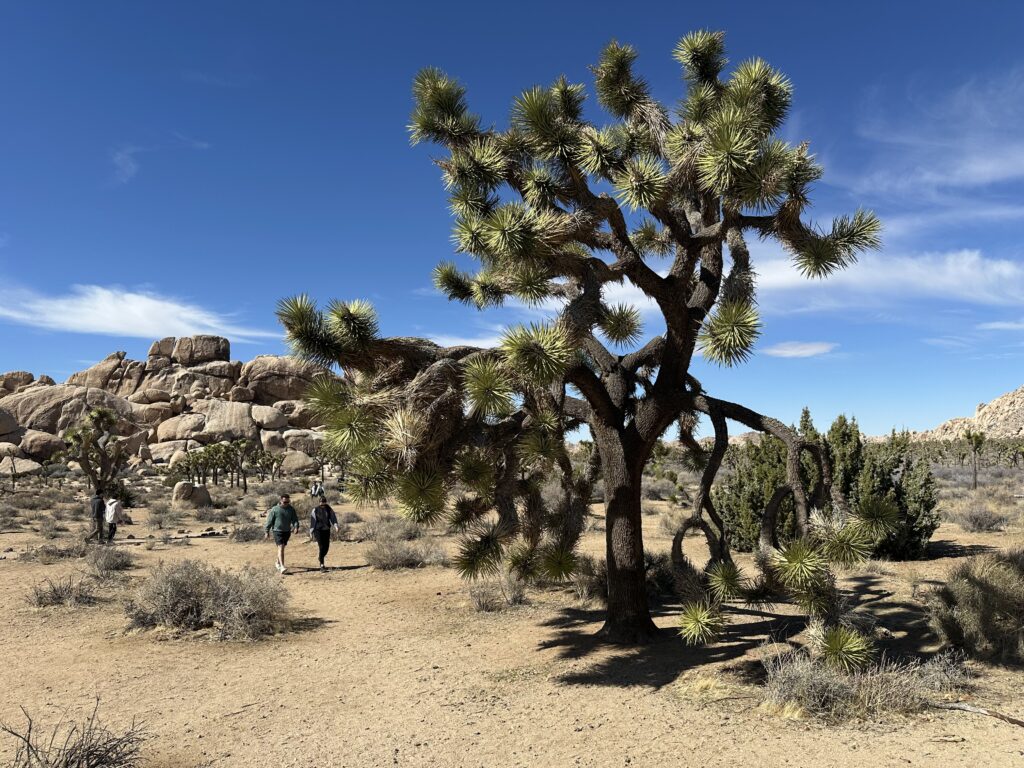
Heart Rock is less than a mile from White Tank Campground, where campers enjoy near silence despite the busy trail thanks to the Flintstones-looking rocks that tuck away campsites. Neighbors for the night include great horned owls hoot-hooting, tortoises and 15 camper vehicles. White Tank, named for white quartz monzonite, is a first-come, first-served site. Campsite reservations are hard to come by at Recreation.gov even though the park has nearly 500 sites. Only two campgrounds have running water, Black Rock and Cottonwood.
Stargazing at 3,800 feet elevation and among billion-year-old rocks reminds me that the heavens look the same to me as they did to the earliest human inhabitants, minus the occasional satellite and airplane. The people of the Pinto Culture who arrived at the end of the Pleistocene era, some 11,700 years ago, saw this generous sky. They resided in what’s now called the Pinto Basin in the southern half of the park, near where the amazing Cholla Cactus Garden sustains thousands of teddy bear cholla.
When I was there, shooting stars outlined Sirius, the brightest star in March’s night sky. Orion’s Belt makes an appearance that time of year, as does the Milky Way, which undoubtedly showered the Uto-Aztecan language tribes with light. They are the Serrano and Cahuilla peoples who arrived after the Pinto peoples and resided in small villages, surviving on acorns, pine nuts and mesquite beans as well as jackrabbits and other small game.
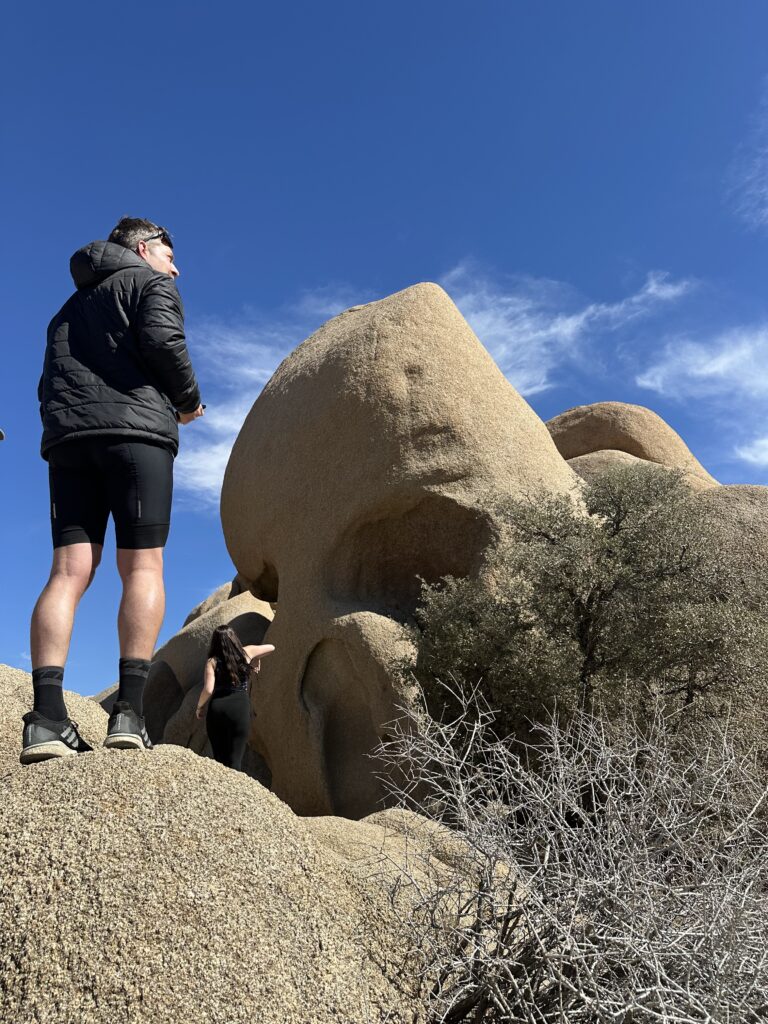
Among the Joshua Tree surprises are the numerous oases tucked among the granite Pinto gneiss, monzogranite that extruded from deep within the earth, forming stained-glass-looking blocks and cracks in heaps around the land. Plants eke out a living by rooting between fissures to find the meagerest of soil.
The native culture was one that thrived in the Oasis of Mara, where desert fan palms shaded them and their pottery and basketry elegantly held water and food. With my cooler of meals and 5-gallon jugs of water, it’s hard to fathom how humans survived. Ingenuity, curiosity and kindness, I imagine.
But the plants. Just why is it that many desert plants have spines instead of leaves? Some obvious reasons, of course, include plants’ protection against predators, but I learned from park literature that cacti evolved to conserve water. During a ranger talk, I also learned that many desert plants have leaves with a hazy or dusty-looking appearance, white hairs protecting them from the sun. The spines collect dew when fog occludes the area, allowing droplets to drip to roots. The spines cloak plants with a humid air layer, reducing moisture evaporation. The spines break wind flow, also reducing evaporation.
I conserve water too on a walk through the Hall of Horrors near the Ryan Campground. Aptly named, the rock formations hide lizards and scorpions and even kids. One family played hide-and-seek, allowing their grade-school-aged children to squeeze between boulders. The rock formations also attracted a youth group on a climbing trip, international visitors waddling through duff and me wondering at the wonderful trees named for the biblical figure, Joshua. Apparently Mormon settlers thought the Yucca brevifolia trees reached toward the sky like Joshua stretched in prayer.
I look up synonyms for “desert” and find the words incongruent with my experience: barren, desolate, forsaken, abandoned, jilted. Instead, Joshua Tree, the Sonoran, the Mojave, bloom with imagination, fortitude and friendliness. Rattlesnakes, scorpions, dagger-sharp yucca and plenty of cacti: There’s lots to love about Joshua Tree National Park.
Jean Arthur’s winter pursuits include xc ski touring with her Labrador retrievers, looking for Yellowstone’s wolves and dreaming of spiny desert landscapes.
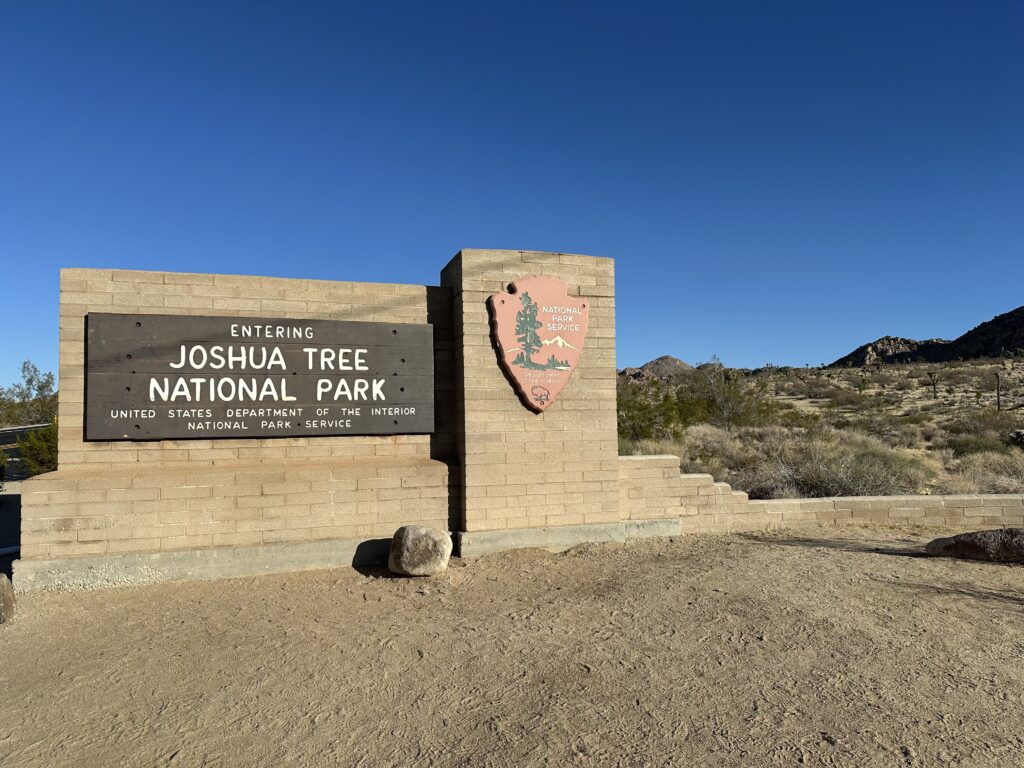
Joshua Tree National Park Passes and Services
Joshua Tree National Park has no gas stations, restaurants, grocery stores or hotels and has very limited cell service. Resupplies are available in the gateway communities of Yucca Valley, Joshua Tree and Twentynine Palms. Park passes are available at entrance gates and at visitor centers.