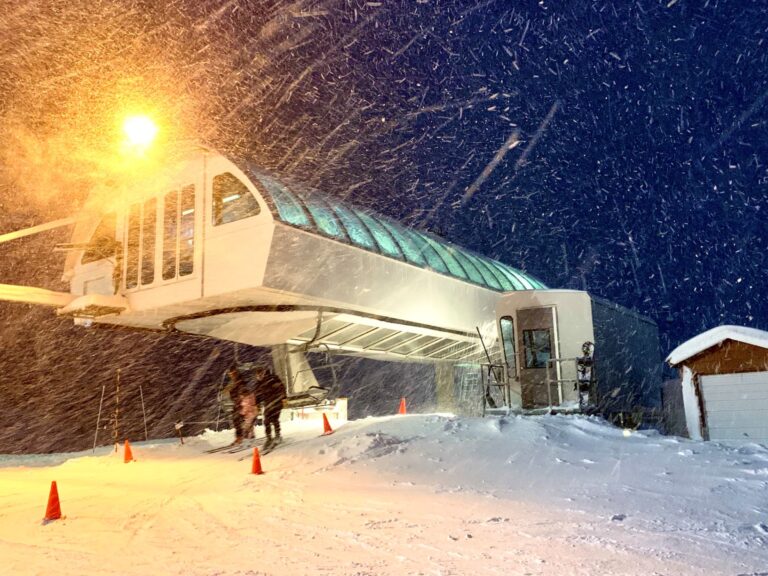
Cover photo courtesy of Silver Mountain Resort
By Brad Northrup
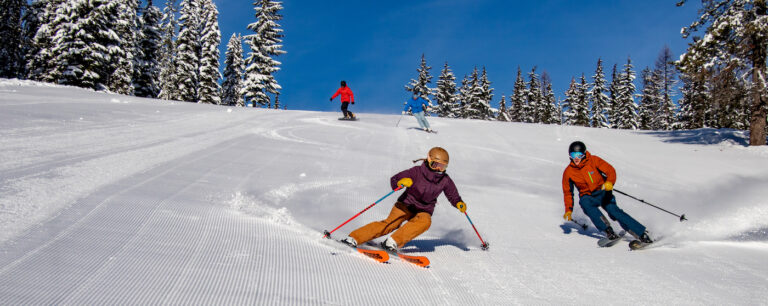
There is a special kind of malice baked into the names of advanced ski runs, and it’s not accidental. Somewhere in a fluorescent-lit office—or maybe a dimly-lit ski patrol shack—there is a person whose sole job is to look at a steep, icy, tree-choked death funnel and say, “Yes. Let’s call this Puppy Love.”
You’ve seen it. You’ve felt it. You’ve clicked into your skis at one of our local mountains, glanced at the trail map, and thought, I’m a competent adult with health insurance. I can do this. And then you notice the run name, which sounds less like a warning and more like a prank.
Advanced runs are never named honestly. No one calls a run “Unavoidable Regret” or “ACL Annihilator.” Instead, they’re given names that suggest whimsy, mild inconvenience or vague encouragement—terms clearly chosen by someone who has never once had to sideslip 800 vertical feet while questioning their life choices.
Take the classics. “Upper Cirque.” Cirque of what, exactly? Cirque implies something graceful, maybe French, maybe involving a soft arc through hero snow. What it actually means is “wind-scoured ice bowl where sound carries and everyone can hear you scream.”
Then there’s the passive-aggressive genre. “Challenge.” “Test.” “Exam.” Nothing says fun day on the mountain like being academically evaluated by gravity. You didn’t study for this. You didn’t even stretch. Yet here you are, being graded harshly by a slope that has decided today is a mogul day whether you like it or not.
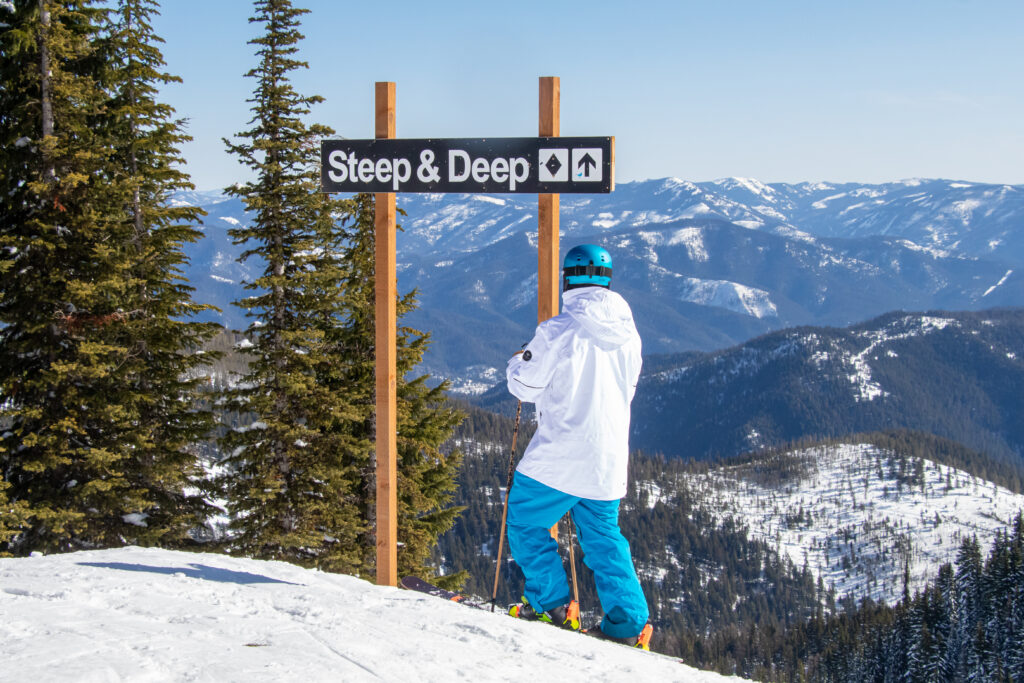
And then there are tree runs. Ah, yes. Tree runs—named by people who clearly blame human anatomy for existing and have held a lifelong grudge against collarbones in particular. “Glades” sounds like a spa treatment. “Trees” implies spacing. “Woods” feels like something Winnie-the-Pooh would frolic through. What it actually delivers are shoulder-seeking saplings, branches aimed directly at your face, and exactly one escape line that vanishes the instant panic sets in.
Sometimes the cruelty is polite. “Hidden.” “Secret.” “Backside.” Cute. Like it’s a quaint little surprise. It’s not a surprise. It’s a trap. A trap with a name designed to make you feel stupid after you’ve already fallen into it.
And then there’s the worst category of all: ironic optimism. “Easy Way.” “Short Cut.” “Last Chance.” These runs are designed specifically to trick tired skiers at 2:30 p.m. into thinking they’ve found a gentle path back to the lift. Spoiler: it is not gentle. It is never gentle. It is a narrow chute filled with refrozen footprints, leading directly to a lift line full of people watching you struggle.
The real insult is that beginners get honesty. “Bunny Hill.” “Easy Street.” “Learning Area.” These are accurate, kind, nurturing names. Advanced skiers get gaslighting. “Oh, you thought ‘Widowmaker’ was a metaphor? That’s on you.”
So here’s your public service announcement, my fellow skiers and riders: if an advanced run has a gentle name, assume violence. If it sounds poetic, expect suffering. If it’s named after something cute, stretch first. The mountain is not your friend—it’s a trickster god with a laminator and a sadistic sense of humor.
See you at the bottom…probably in a pile.
Brad Northrup is a former ski racer, coach and ski industry professional. We doubt he will ever be invited to help name runs.