By Sara Kennedy
Cover photo courtesy of Aaron Scott
After years of curiosity, this past winter I decided to start working on skills for biathlon, a sport virtually unknown in the United States but eternally popular in Northern Europe. I’ve long been intrigued by the combination of the two opposite sports—heart-thumping, lactic acid-pumping Nordic skiing and calm, focused, in-the-zone rifle marksmanship.
Regularly combining those two skill sets in the Inland Northwest, however, is no simple task. On the U.S. side of the border, the closest biathlon areas to the Spokane region are Crosscut Mountain Sports Center in Bozeman, Mont., the Methow Valley Trails in Winthrop, Wash., and Stevens Pass Nordic Area. There are multiple opportunities to ski and shoot north of the border in Canada, but unfortunately my passport is expired.
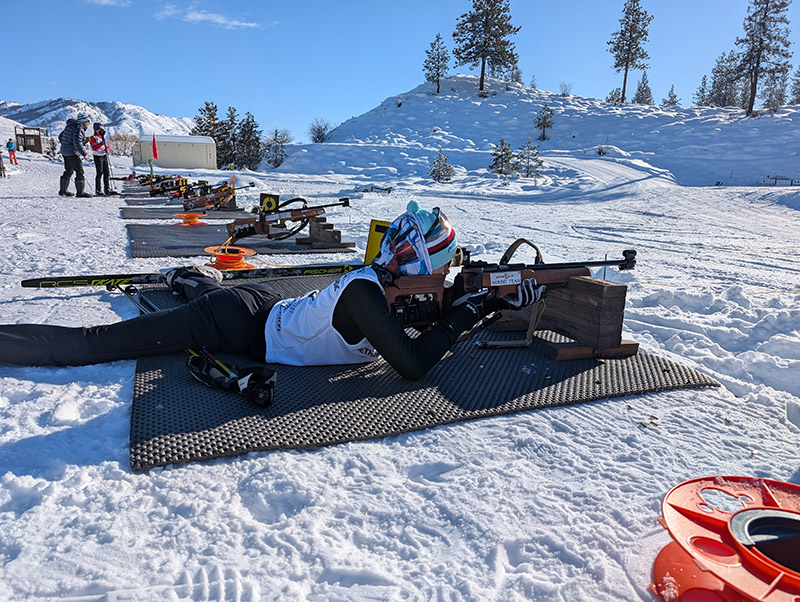
In September, I attended a beginner biathlon clinic hosted by the Washington Biathlon Association near Ravensdale. The clinic focused on the shooting aspect of biathlon, with instruction on safety and marksmanship. The WBA supplied biathlon rifles for the day, which are specialized .22-caliber rifles with backpack-strap-like harnesses. The event drew a small but varied group, ranging from ages 9 to over 50. Among the dozen or so of us, I was the only one who traveled from east of the Cascades, which made me wonder what it would take to build a biathlon scene and culture on our side of the state.
Local Love for the Sport
While fringe in the U.S., the benefits of biathlon are many. Elise Putnam, the program director for Methow Biathlon, paints a supportive picture. “Biathlon is a great way to keep kids engaged in skiing and getting outside,” she says. “It’s a cool way to keep people active and helps build mental fortitude.”
Aaron Scott, a seasoned biathlete from Spokane, agrees. He describes the sport of biathlon as exciting and addictive for both athletes and fans. While competitions in the U.S. typically draw in friends and family members of the racers, European stadiums boom with die-hard fans and can be wild events. Biathlon ranks as the #1 most popular winter sport in some Northern European countries.
“Biathlon is really interesting to watch. The field gets reshuffled every 3 to 5 kilometers,” Scott says. For every missed shot, athletes have to ski penalty laps, which means stronger skiers may end up behind better marksmen. “It’s an unbelievably fun sport. Most Nordic skiers are interested in trying biathlon, but the financial barriers prevent them from getting involved.” Scott specifies that quality biathlon rifles start at $3,000 and go up from there. Add the cost of ski equipment and travel, and the biathlon price tag quickly becomes out of reach for many.
Mike Burns, a Spokane U.S. Ski & Snowboard alpine official, feels the void our missing biathlon program has created. Having three daughters involved in Spokane Nordic over the years has put him adjacent to biathlon when traveling for races. When he had the opportunity to see his girls dabble in biathlon while at Crosscut and in the Methow, he was inspired.
“I’d like to get this going locally,” Burns says, in addition to mentioning past attempts. There was once a multimillion-dollar master plan that included purchasing Inland Empire Paper land near Mount Spokane State Park for a range, new trails, a lodge and parking. Overall, the plan proved too grandiose and fell apart. Because the current Nordic area lies within state park boundaries, the discharge of firearms is illegal, rendering the addition of a traditional range impossible.
The Future of Lasers in Biathlon
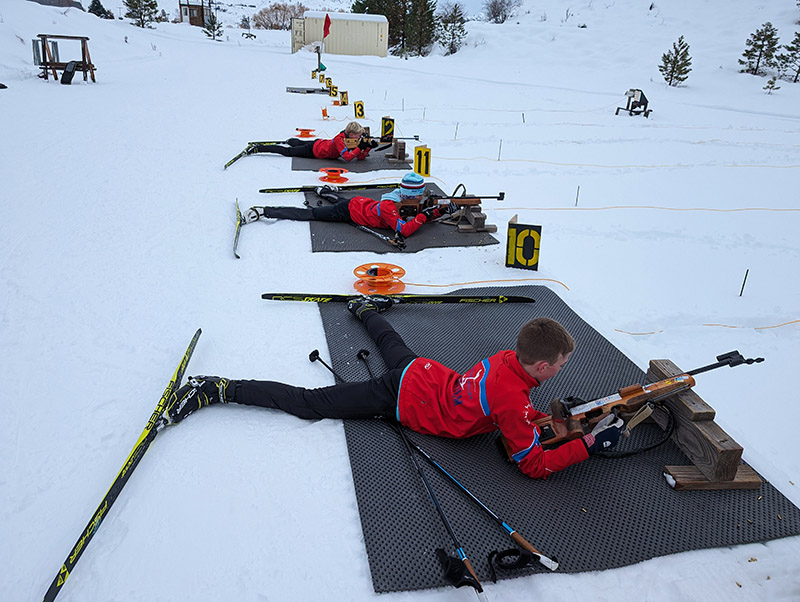
Where legalities and logistics pose problems, technology often offers an answer. The introduction of laser rifles and ranges to the biathlon scene significantly reduces costs, space needs and overall barriers to entry. Burns has seen them in action and believes they are just what might work at Mount Spokane. Because the rifles are specific to the range, athletes would not need to supply their own. While the price tag is similar for laser and live-fire rifles, there are grants available to help support the development of laser biathlon programs for Nordic clubs. And, of course, a local opportunity eliminates those travel costs for athletes.
John Farra, the director of sport development for US Biathlon, has supported efforts just like those that would be needed at Mount Spokane to convert from a Nordic-only ski area to a biathlon area. “Biathlon is part of Nordic, not a separate thing,” he told me over the phone. With US Biathlon’s Laser Biathlon Training Program, Nordic coaches are taught new skills to support their skiers with equipment on loan from US Biathlon. In the three Nordic clubs that hosted the program this past winter, all three are moving forward with efforts to raise funds for a permanent program.
For newer sports, demand generally leads to supply, such as the increase in local gravel bike rides and races over the past several years. The growth of biathlon has a different genesis, where a few dedicated, die-hard athletes provide opportunities for newbies—usually skiers—to get a taste. Just a few laps on skis with a couple rounds of ‘pew pew’ is all it takes to inspire and cultivate the next generation of biathletes. Laser biathlon is an opportunity to open up that experience in our area.
Additionally, laser biathlon stands to bridge the gap across the political spectrum. Aaron Scott recognizes that Nordic skiing tends to attract the liberal and environmental types who generally aren’t big on guns, much like the family he grew up in. Laser rifles provide a safe entry point to the sport that’s potentially more attractive to a wider range of views.
With so many benefits across age groups and backgrounds, laser biathlon will be on my list of up-and-coming sports to watch. And, with a few more ski lessons, compete in. To show support for laser biathlon at Mount Spokane, please reach out to Spokane Nordic at [email protected].
Sara Kennedy is an elementary school librarian. She plans to take some ski lessons this winter. @saralynnekennedy